Gardening tips
Why a lawn turns yellow
A yellow lawn is a symptom behind which lies one of a dozen causes. Half of them have nothing to do with fertiliser. We explain how to tell what happened from the shape of the patches and the time they appeared, and how to fix it.
First look at the shape
What tells you most about the cause is not the colour but exactly how the lawn turned yellow: all over, in patches, in stripes or in rings. The second clue is when it happened: after heat, after mowing, after feeding or in spring after winter.
| What you see | Most likely cause |
|---|---|
| Round yellow or brown patches with a bright green rim | Dogs |
| The lawn yellows all over in the heat, most strongly on raised spots and near paths | Drought |
| Straw colour right after mowing, ragged tips | Mowing too low, blunt blade |
| The whole lawn is evenly pale green, grows slowly | Nitrogen deficiency |
| The grass is yellowish, young leaves are lighter, the soil is alkaline | Iron deficiency |
| Patches or stripes a few days after applying fertiliser | Fertiliser burn |
| Patches with a coating, specks, growing rings | Fungal diseases |
| The turf peels off like a carpet, without roots | Beetle grubs |
| Sparse pale grass under trees | Shade and competition with tree roots |
Dogs
The classic picture: a round patch of scorched grass surrounded by a ring of thicker, darker green. In the centre the concentration of nitrogen and salts from urine is so high that it burns the grass, while at the edges the diluted nitrogen acts as a feed. The smaller the dog and the more often it goes to the same spot, the more visible the patch.
What to do: flush the spot with water right after the walk — this is the most effective way. Rake out the scorched grass, loosen the soil and overseed. Fertiliser will not help here: the problem is an excess, not a shortage.
Drought, heat and mowing
In severe heat without watering, lawn grasses go dormant: the leaves turn yellow and dry out, but the crown and roots are alive. After rain such a lawn usually grows back. A long drought without watering can kill the grass completely, especially on sandy soil and on south-facing slopes.
What to do: water less often but deeply, early in the morning or in the evening. In the heat, mow higher and less often than usual. Longer grass shades the soil and tolerates drought better. Do not apply fertiliser to a dried-out lawn — that is a direct route to burn.
Another common cause is mowing too low. If you cut more than a third of the grass height at once, the yellowed bases of the stems are exposed, and the lawn looks straw-coloured for weeks. A blunt blade tears the leaves instead of cutting them, and every tip turns brown. Sharpen the mower blades and raise the cutting height in the heat.
Lack of nitrogen and iron
Nitrogen is the main element for a lawn. Every mowing removes part of the leaves with their nutrients from the area, and without feeding the lawn gradually gets paler and thinner, and moss and clover appear in it. Hunger shows as an even paleness over the whole area and slow regrowth after mowing.
Iron is responsible for a rich green colour. Its shortage is more often linked not to poor soil but to an alkaline reaction: on limy soils and when watering with hard water, iron changes into an unavailable form. How to tell nitrogen and iron deficiency apart by the leaves is explained in detail in the article on chlorosis and yellow leaves.
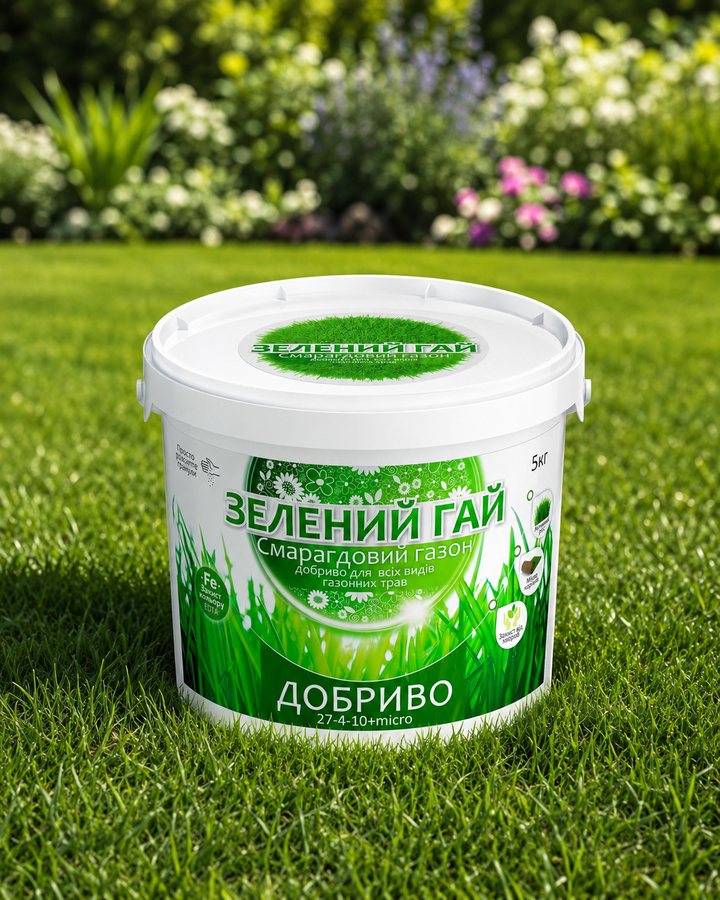
What to do: from spring to the end of summer the right choice for a lawn is “Emerald Lawn” with NPK 27-4-10: high nitrogen gives density and growth, and iron (Fe) a deep green colour without yellowing. The rate is 25 g (1 scoop) per 1 m², on moist soil and dry grass, with watering after application. The full seasonal schedule — in the article on feeding a lawn.
Fertiliser burn
Yellow or brown patches and stripes that appear a few days after feeding are almost always the result of uneven application. The granules fell in a heap, stayed on wet blades, the spreader passed twice over the same strip, or the fertiliser was scattered on a dry lawn without watering.
What to do: flush the affected spots generously with water several times to wash out the excess salts. The grass usually grows back; if not, overseed. Next time split the rate into two passes, lengthwise and crosswise. More details — in the article on overfeeding.
Diseases and pests
Fungal lawn diseases — dollar spot, red thread, brown patch, snow mould after winter — develop more often in warm, humid weather, on a lawn with a thick layer of thatch, with evening watering and with an excess or shortage of nitrogen. Signs: patches with sharp edges, a coating, reddish threads, dark specks on the blades, widening rings.
What to do: water in the morning so the grass has time to dry by evening, rake out the thatch, aerate, and if necessary treat with a fungicide according to the instructions. Balanced nutrition makes the lawn more resistant but does not cure the disease.
If the yellow patches are growing and the turf can easily be lifted by hand like a carpet, there are most likely grubs of the cockchafer or other beetles under it, gnawing the roots. Another sign can be birds and moles actively digging up the lawn. Here you need products against soil pests and overseeding of the damaged areas.
How to prevent yellowing
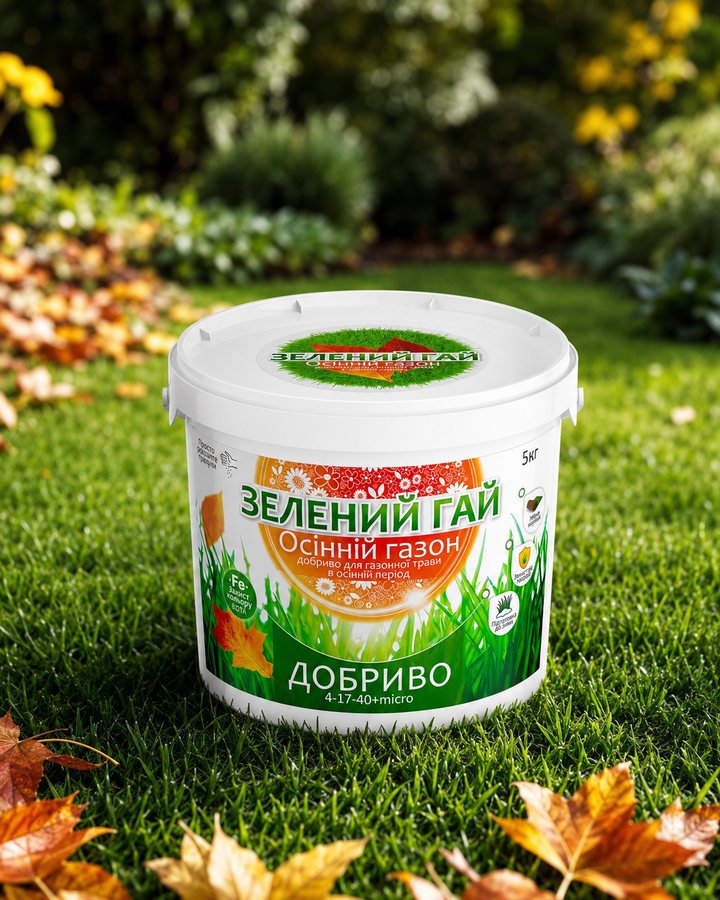
- Feed regularly: nitrogen in spring and summer, potassium in autumn. The autumn formula “Autumn Lawn” with NPK 4-17-40 is applied so the turf overwinters better and greens up early in spring.
- Mow often but not low, with a sharp blade.
- Water deeply and rarely, in the morning.
- Every spring rake out the thatch and aerate compacted spots — this is described step by step in the article on restoring a lawn after winter.
Frequently asked questions
Will a lawn that turned yellow in the heat recover?
If the yellowing is linked to a short drought, usually yes, after rain or watering. Check the base of the tufts: if it is green and springy, the grass is alive.
Will fertiliser help if the lawn is yellow from dogs?
No. Dog patches are an excess of nitrogen and salts. What is needed is water and overseeding.