Gardening tips
Superphosphate: single and triple
Superphosphate gives a plant phosphorus and hardly anything else. We look at how single differs from triple, when and where to put it so the phosphorus reaches the roots, and why scattering it on the surface is almost useless.
Single and triple superphosphate
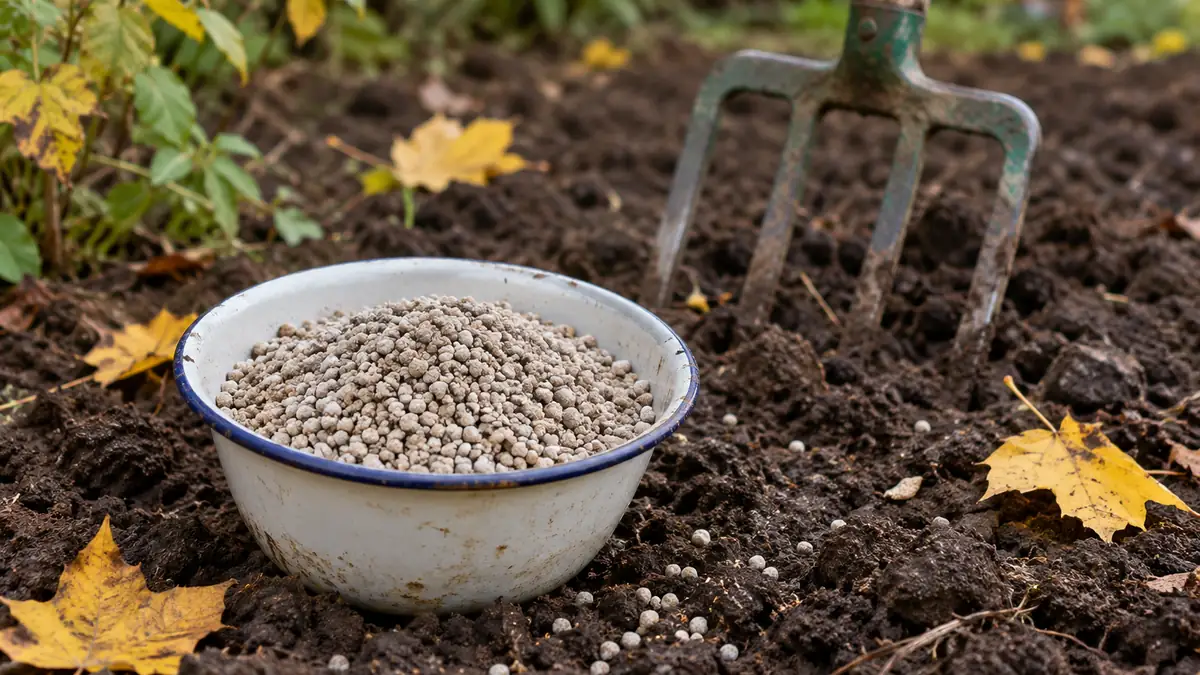
Both fertilisers are made from phosphate rock treated with acid so the phosphorus turns into a form plants can use. Phosphorus on the bag is given as the oxide P₂O₅, as in any NPK formula.
| Single | Triple | |
|---|---|---|
| Phosphorus (P₂O₅) | about 20 % | roughly 42–48 % |
| What else is inside | a lot of gypsum, that is, calcium and sulphur | a little calcium and sulphur |
| Rate for the same area | taken as 1 | roughly half |
Almost half the weight of single superphosphate is gypsum. For plants it is not ballast: cabbage, onions, garlic and legumes take up a lot of sulphur. Triple is handier because there is less of it to carry and spread. When measuring out triple, halve the rate for single, otherwise it is easy to give twice the phosphorus.
What phosphorus does and what it does not
Phosphorus is needed for roots, flower bud formation, fruit set and the ripening of seeds and fruit. Young plants take it up especially eagerly: seedlings and young plants short of phosphorus stall, and their leaves turn purple or dull red on the underside. This is most often seen on tomato seedlings in cold soil.
Without nitrogen and potassium, superphosphate will not feed a plant. It will not give leafy growth in spring and will not help a thuja with brown foliage. Nor does it “switch on” flowering if the plant is short of light or overfed with nitrogen. Too much phosphorus also stops the plant taking up zinc and iron, so an extra handful “for good flowering” can end in chlorosis.
Why the granule dissolves slowly and hardly moves
Superphosphate granules do not dissolve fully in water. Part of the phosphorus goes into solution at once, the rest is released over weeks. And dissolved phosphorus hardly moves in the soil: it binds to calcium in alkaline soils and to iron and aluminium in acid ones, and stays where it was, a few centimetres from the granule.
The practical conclusion follows. Rain will not carry superphosphate scattered on the surface down to the roots, and most of the phosphorus will stay in the top layer. It has to go where the roots will be: into the planting hole, into the furrow, into soil being dug.
For the same reason phosphorus is poorly taken up on strongly acid soils. Such plots are limed separately, and superphosphate is applied a few weeks later, because mixed with lime or ash it turns into an even less available form.
Autumn or spring
On vegetable beds and in soil being dug, superphosphate pays off best when applied in autumn. Over winter some of the phosphorus dissolves and spreads around the granules, and in spring the roots find it ready. This matters most on heavy clay soils. On light sandy soils it is also put in in spring: they warm up faster, and phosphorus binds less there.
In spring superphosphate goes into the hole when planting out seedlings and into the planting pit of a sapling. It is mixed with the soil at the bottom so the granules do not touch the roots directly. How to prepare a pit for a tree or shrub is described in the article on planting saplings.
Under perennials, where you cannot dig, the granules are worked into the loose top layer around the edge of the crown, in shallow holes or small furrows, and watered in. Scattering it on the surface under a lawn or thujas does little good, precisely because phosphorus does not move.
Superphosphate extract
Gardeners often make a water extract: the granules are covered with hot water, left for a day with occasional stirring, and plants are watered with the settled solution. This way some of the phosphorus goes into the water faster, and it can be given to the plant during the growing season. The sediment at the bottom is almost insoluble and can be tipped into the compost. Advice on the strength of such extracts varies widely, so start with a weak solution.
When a complex fertiliser is easier
Superphosphate is good value when it is phosphorus you need: filling a planting pit, seedlings on poor soil, preparing a bed in autumn. For all other feeding you will have to buy nitrogen and potassium separately, work out rates for three bags and remember what does not mix with what.
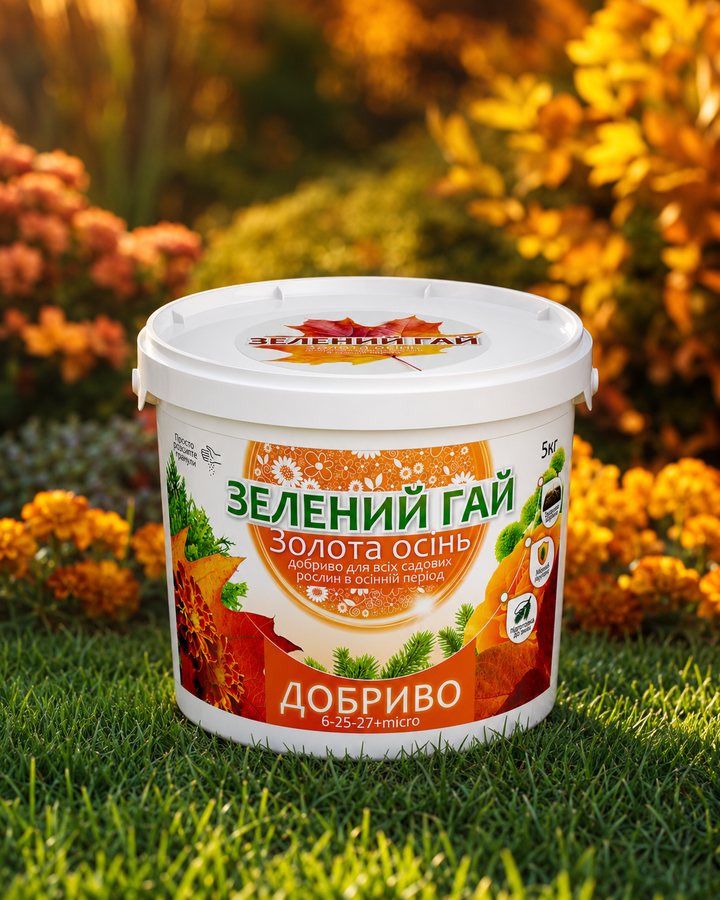
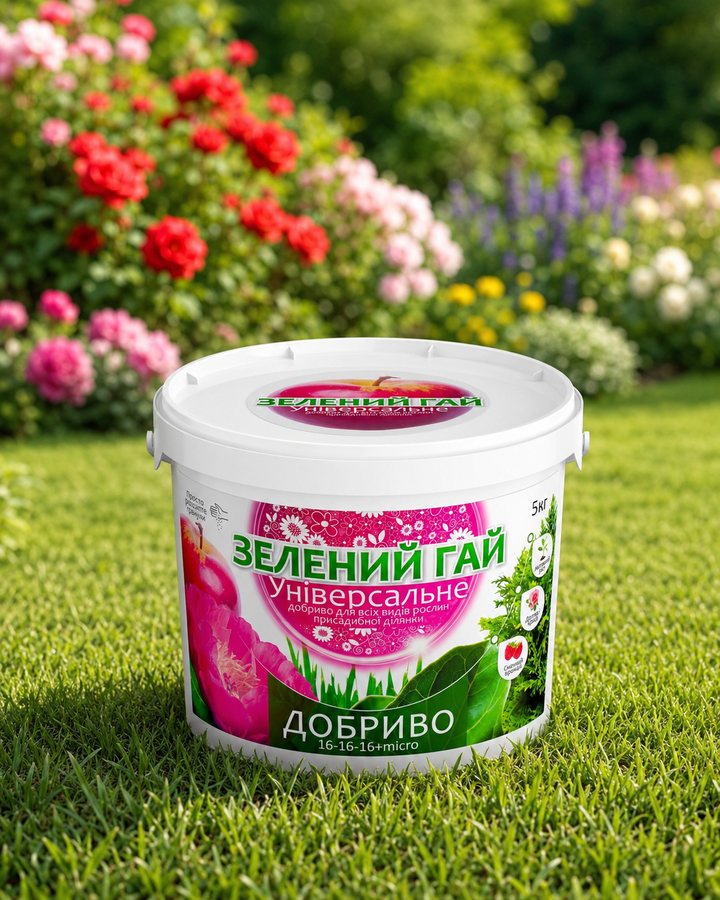
For autumn there are ready-made low-nitrogen formulas for this. “Golden Autumn” has NPK 6-25-27: plenty of phosphorus and potassium, little nitrogen, and it suits every plant in the garden. For spring and summer there is the balanced “Universal” with NPK 16-16-16. Both contain the trace elements MgO, Fe, Mn, B, Cu, Zn, Mo and Co. The rate is 25 g (1 scoop) per 1 m² or per bush, and 60 g under mature shrubs and trees. These granules are also best mixed lightly into the top layer of soil. For what to feed the garden before winter, read the article on autumn feeding.
Frequently asked questions
Can superphosphate be applied together with urea?
Yes, if you mix them just before application. A mixture that has been standing is harder to work with: it gets damp and clumps.
Can superphosphate be spread on snow or frozen ground?
There is little point. The phosphorus will not go down with the meltwater, and some of the granules will be washed away to where there are no plants.
Is it worth sprinkling superphosphate under a lawn and thujas?
Scattered over grass or under conifers, it will stay in the top centimetre of soil, and little will reach the roots. Lawns and conifers are easier to give phosphorus as part of a complex fertiliser that dissolves completely and also contains nitrogen and potassium.
Granular or powder?
They work the same. Granules are easier to spread evenly, do not make dust and cake less in the bag, so gardeners usually choose them.
How much superphosphate goes into a hole for seedlings?
Rates depend on the soil and the crop. The safest course is to follow the instructions on the bag, mix the fertiliser with the soil in the hole and not exceed the rate, because extra phosphorus will not make the plant any stronger.