Gardening tips
What the NPK numbers on the package mean
Three numbers separated by hyphens are the most important thing written on a pack of fertiliser. We explain what they mean and how to choose a formula by them, using examples from our range.
The three numbers are the percentages of the three main elements
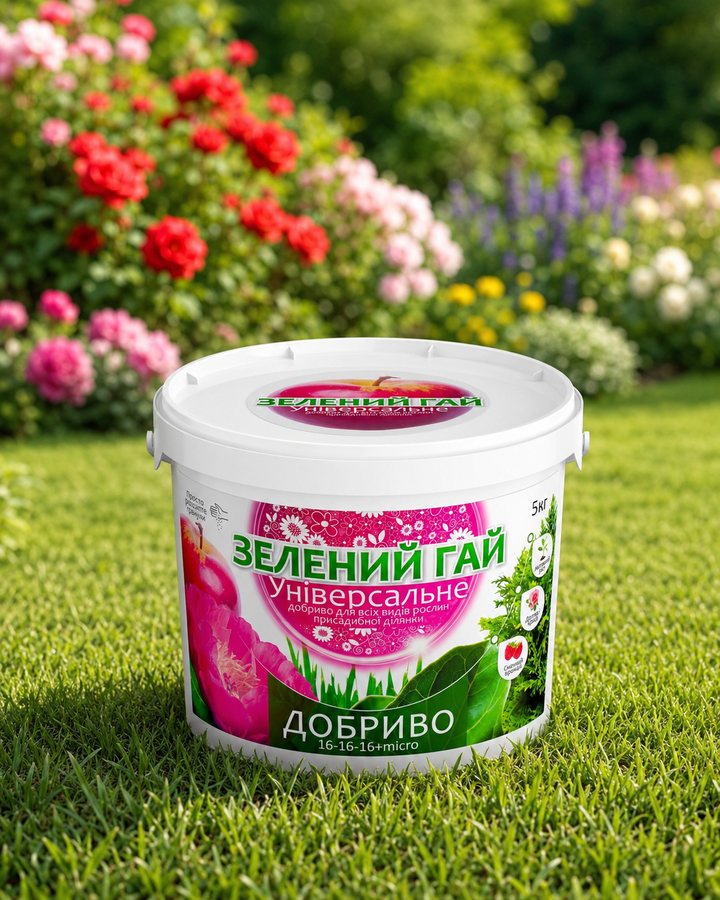
The notation NPK 16-16-16 reads like this: the fertiliser contains 16% nitrogen (N), 16% phosphorus (P) and 16% potassium (K) by weight. The order is always the same — nitrogen, phosphorus, potassium — so it is impossible to mix them up. By international convention phosphorus and potassium are counted as oxides (P₂O₅ and K₂O), but for a gardener this changes nothing: what matters is comparing the numbers with each other.
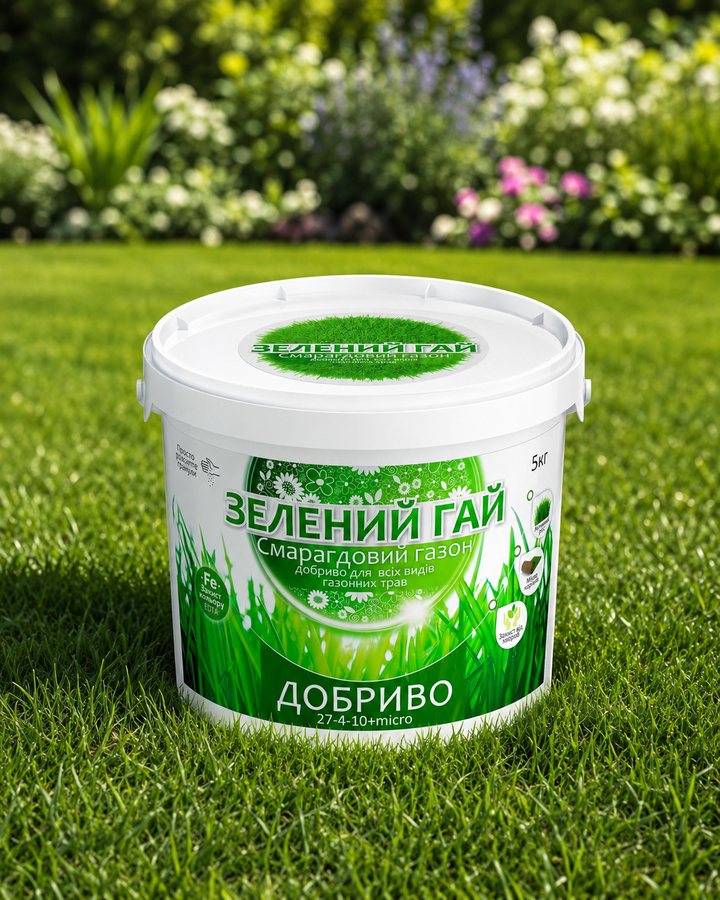
A percentage is easy to convert into grams. One scoop of granules is 25 g. If the formula is 16-16-16, that scoop contains roughly 4 g of each of the three elements. If it is 27-4-10, the same scoop already contains about 6.75 g of nitrogen, 1 g of phosphorus and 2.5 g of potassium. That is how one and the same dose gives completely different effects.
The sum of the three numbers shows how concentrated the fertiliser is. The rest of the weight is other compounds: oxygen in the oxides, magnesium, micronutrients and the substances the granule is formed from. Every bucket of our garden range contains, besides NPK, MgO, Fe, Mn, B, Cu, Zn, Mo and Co — more about them in the article on micronutrients.
What each element does
- N — nitrogen. Building material for leaves and shoots. Gives growth and a rich green colour. Deficiency: the plant turns pale evenly, starting with the lower leaves, and becomes smaller. Excess: lush greenery instead of flowers, soft shoots that do not have time to ripen before winter.
- P — phosphorus. Responsible for roots, the formation of flower buds and fruit set. Especially needed by young plants and at the start of flowering.
- K — potassium. Firms up tissues, regulates water balance, improves the taste and colour of fruit, increases resistance to drought, disease and frost. That is why autumn formulas contain the most potassium.
A simple rule: the first number is greenery, the second is roots and blooms, the third is strength and overwintering. That is enough to read any package.
How to read the ratio: examples from our range
What matters is not the absolute numbers but which of them dominates. Here is how it looks on real formulas.
| Fertiliser | NPK | What dominates | What for |
|---|---|---|---|
| Universal | 16-16-16 | Balance | Flowers, shrubs, trees, lawn — support without imbalance |
| Emerald Lawn | 27-4-10 | Nitrogen | Dense, deep-green grass that keeps regrowing after mowing |
| Tasty Berry | 20-17-14 | Nitrogen and phosphorus | Strawberries, raspberries, grapes: bush growth and fruit set |
| Bright Flowerbed | 14-17-18 | Phosphorus and potassium | Roses and garden flowers: buds and petal colour |
| Lush Conifer | 10-10-15 | Potassium | Thujas, junipers, pines: dense needles without browning |
| Exquisite Hydrangea | 15-10-20 | Potassium, moderate nitrogen | Hydrangea, azalea, rhododendron |
| Magic Blueberry | 15-12-20 | Potassium | Blueberries, cranberries, bilberries |
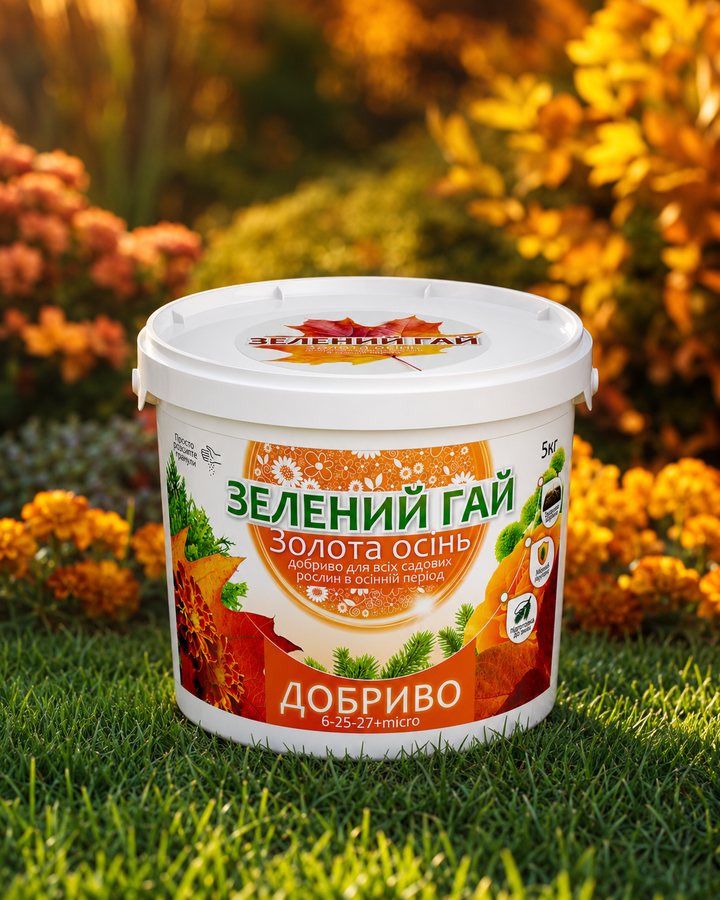
| Golden Autumn | 6-25-27 | Phosphorus and potassium, little nitrogen | All plants in autumn: roots and overwintering |
| Autumn Conifer | 5-20-25 | Phosphorus and potassium | Conifers before the cold |
| Autumn Lawn | 4-17-40 | Potassium | Turf before winter |
| Autumn Hydrangea | 3-10-18 | Potassium, minimal nitrogen | Acid-loving plants in autumn: shoot ripening |
Compare two lawn fertilisers. The summer “Emerald Lawn” 27-4-10 is almost entirely “about nitrogen”: grass constantly loses leaf under the mower and needs to restore it. The autumn 4-17-40 is the opposite: minimal nitrogen, ten times more potassium. In autumn the lawn no longer needs to grow, it needs to survive the frost.
Why summer and autumn formulas are opposite
In spring and early summer a plant builds up mass, so spring formulas have noticeable nitrogen. From the second half of summer the priority changes: shoots must become woody, and buds must be set for next year. Nitrogen at this time does harm — it provokes new tender growth that is the first to be frost-damaged.
That is why autumn fertilisers are easy to recognise by a small first number: 6, 5, 4, 3. For example, “Golden Autumn” 6-25-27 suits all garden plants precisely because it hardly stimulates growth. More details in the article on autumn feeding.
Why the numbers on liquid fertilisers are lower
On the bottles of the “Mister Tsvit” houseplant range you will see formulas such as 7-3-6, 9-3-4 or 1.5-4-2.5. This does not mean they are “weak”: a liquid concentrate is diluted in water and dosed with a cap, not with scoops. Comparing a liquid fertiliser with a granular one by absolute numbers makes no sense. Compare the ratios: 9-3-4 (ficus) — a clear nitrogen bias for foliage, 3-8-5 (violet) — phosphorus for flowering, 2-5-8 (cactus) — potassium for firm tissues.
How to choose a formula: a short guide
- Define the goal. Greenery and growth — look for a nitrogen bias. Flowering and fruit — phosphorus and potassium. Preparing for winter — low nitrogen.
- Consider the season. Nitrogen formulas — spring and the first half of summer. After mid-July — only formulas with a small first number.
- Take the plant into account. Acid-loving plants need special formulas, conifers more potassium, the lawn nitrogen in summer and potassium in autumn.
- Do not try to “assemble” a formula from several fertilisers. A balanced composition already accounts for how many elements a plant takes up at once; mixing by eye most often ends in overfeeding.
Frequently asked questions
If the numbers are higher, is the fertiliser better?
No. Higher numbers mean more substance in the same weight, not a better result. What matters more is that the ratio suits the plant and the season, and the dose follows the instructions.
Can one Universal 16-16-16 feed the whole garden?
For maintenance — yes, that is what it was created for. But for specific tasks — a dense lawn, abundant flowering, acid-loving plants or autumn — specialised formulas work more precisely.
How much fertiliser to apply?
For the granules of the range — 25 g (1 scoop) per 1 m² or per bush, 60 g under mature shrubs and trees. How to convert this to your plot is shown in the article how much fertiliser a plot needs.