Gardening tips
Urea (carbamide) in the garden and vegetable plot
Urea contains 46 % nitrogen, more than any other nitrogen fertiliser in a garden shop. We explain when it is really needed, how to apply it to the soil and as a foliar spray, and where it does harm.
What urea is and how much nitrogen it contains
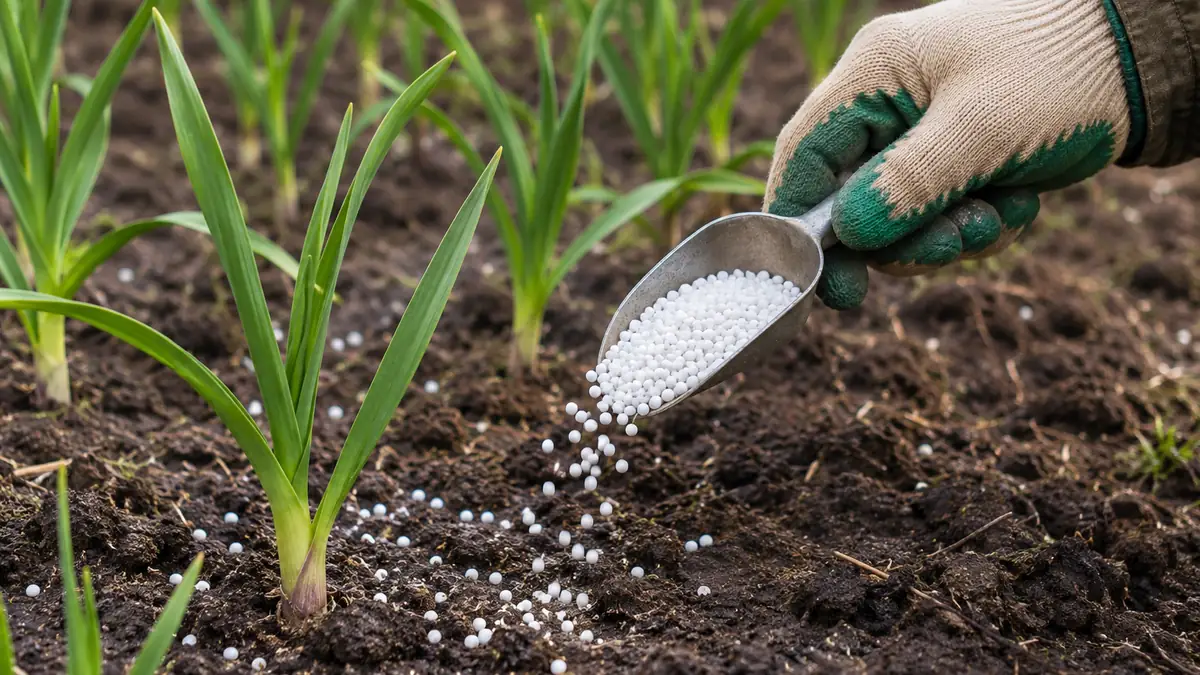
Urea and carbamide are the same substance, CO(NH₂)₂. It is sold as small white odourless granules that dissolve quickly in water. It contains 46 % nitrogen, so a kilogram of fertiliser holds 460 g of nitrogen. For comparison, ammonium nitrate has about 34 %, so for the same area you need roughly a quarter less urea.
Urea has no phosphorus, potassium, magnesium or trace elements. On a pack its formula would read 46-0-0. How to read such numbers is explained in the article on NPK.
What happens to a granule in the soil
Roots do not take up much urea directly. First, soil bacteria break it down to ammonium with the enzyme urease, and then the ammonium gradually turns into nitrate. In warm, moist soil this takes a few days; in cold soil it takes longer. So in spring, before the ground warms up, urea acts more slowly than ammonium nitrate.
This breakdown produces ammonia. If the granules lie on the surface of dry soil, some of the nitrogen escapes into the air, and you pay for fertiliser the plant never got. Losses are highest on alkaline soils and in hot weather. Hence the main rule: work urea a few centimetres into the soil, or apply it before rain or watering so the water carries it down.
One more property: used over a long time, urea noticeably acidifies the soil. For blueberry or hydrangea that is no problem, but on acid sandy plots you will need to keep an eye on soil pH.
When urea is really needed
A plant spends nitrogen on leaves and shoots, so urea fits where leafy growth is needed and is lacking right now:
- in spring, at the start of growth, under fruit trees, berry bushes, garlic and onions, if the soil is poor;
- when the lower leaves turn evenly pale and yellow and new growth is small, and the cause really is a lack of nitrogen;
- on the lawn at the start of the season, after the first mowing;
- for foliar feeding when the roots are working poorly: after a frost, in cold wet weather, after transplanting.
From midsummer onwards urea is not applied to perennials. Nitrogen at that time pushes new growth that does not have time to turn woody before the frosts, and these shoots are the first to get frost-damaged.
How to apply it to the soil
For garden crops the usual rate is 10–20 g per 1 m² per application. For a tree, count the area of the trunk circle out to the edge of the crown.
- Scatter the granules evenly over moist soil, keeping away from the trunk or stem.
- Work them 3–5 cm into the soil with a rake or hoe.
- Water if no rain is forecast.
Before sowing and planting, urea is applied a few days before the work and mixed into the soil. A granule lying next to a seed or a young root burns it: a solution that is too concentrated, and ammonia, form around it.
Foliar feeding with urea
Urea is well suited to foliar spraying because it passes quickly through the leaf blade. Through the leaf the plant gets nitrogen within a day or two, without needing the roots. For vegetables and soft fruit the solution is made weak, usually 30–50 g per 10 l of water. Dissolve it in the bucket completely, down to the last granule.
Spray in the evening or in cloudy weather so the droplets do not dry in the sun. Too strong a solution causes burns: the leaf edges turn brown and dry within a day or two. If in doubt, treat one branch or a few plants first and look at them the next day.
Fruit orchards have a separate technique. In early spring, before the buds open, the trees and the ground under them are sprayed with a urea solution ten or more times stronger than the foliar one, against diseases overwintering on fallen leaves. On green leaves that concentration would scorch them, so this solution is used only on bare branches.
Overfeeding and burns
Excess nitrogen shows within a few weeks. Leaves turn dark green, large and soft, shoots stretch, and there are few flowers and little fruit set. Such plants get sick more often and attract aphids. Nitrate builds up in fruit and greens, especially in leafy vegetables.
Root burn from dry granules looks different: the plant wilts in moist soil and the leaf edges turn brown. If this happens, remove the top layer of soil with the remaining granules and soak the area generously with clean water several times. Read more about the signs and how to save the plant in the article on overfeeding with fertiliser.
Why nitrogen alone is not enough
Urea gives only one of the three main nutrients. A plant fed nothing else for years grows green and lush, but it lacks potassium for strong tissue and wintering and phosphorus for roots and flowering. Such a plant overwinters worse and flowers more poorly. With too little potassium, fruit gets smaller and loses flavour.
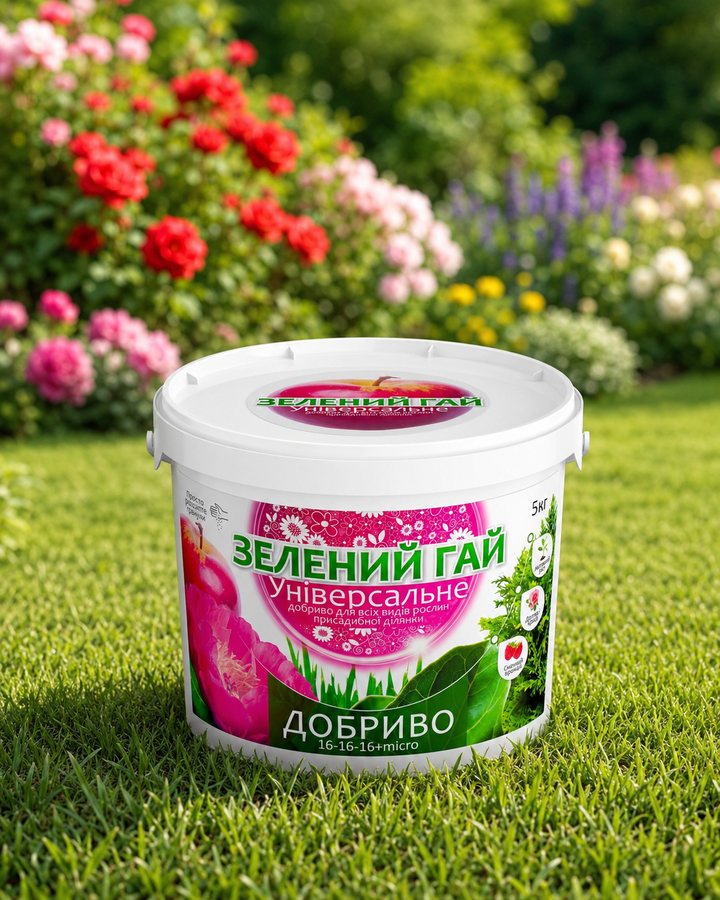
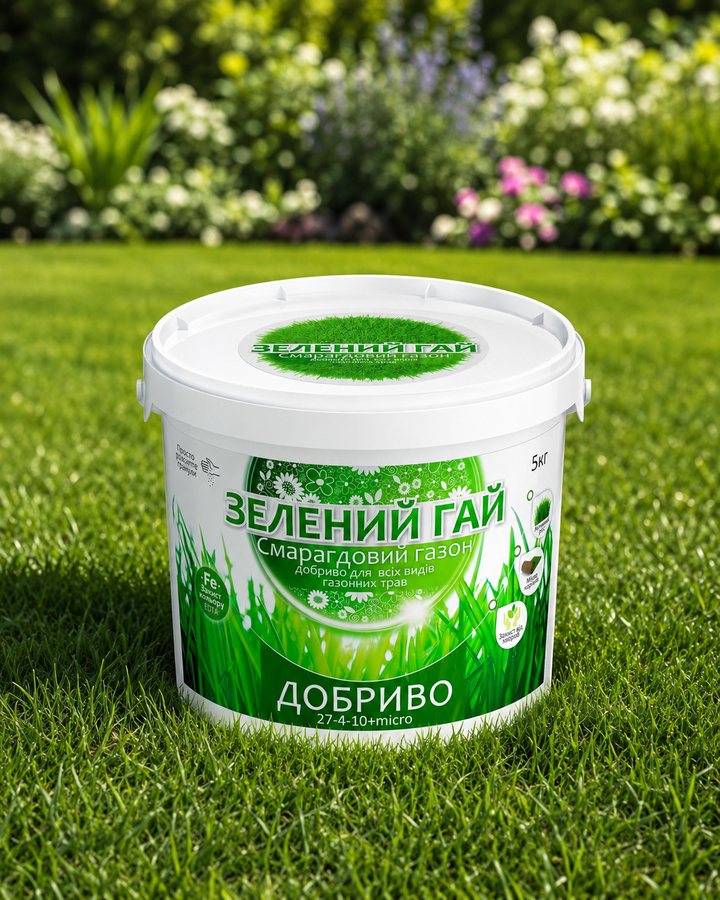
Urea is good as targeted help: a quick nitrogen boost in spring or a foliar feed. For the main feeding of a garden it is easier to use a complex formula in which nitrogen is already balanced with phosphorus and potassium. For example, “Universal” has NPK 16-16-16 and trace elements (MgO, Fe, Mn, B, Cu, Zn, Mo, Co). Its rate is 25 g (1 scoop) per 1 m² or per bush, and 60 g under mature shrubs and trees. For a lawn, which needs nitrogen most of all, there is “Emerald Lawn” with NPK 27-4-10 and iron.
Frequently asked questions
Urea or ammonium nitrate: which is better in spring?
In cold soil ammonium nitrate acts faster, because half its nitrogen is already in nitrate form. Urea is more concentrated and better for foliar spraying. Read the comparison of the two in the article on ammonium nitrate.
Can urea be mixed with other fertilisers?
It is mixed with superphosphate and potassium fertilisers just before application. It is not applied at the same time as lime, dolomite or ash: in alkaline conditions the nitrogen from urea escapes as ammonia faster.
How should an open bag be stored?
Urea draws moisture from the air and cakes. Keep the bag tightly closed in a dry place, away from children and animals.