Gardening tips
Feeding grapes by stage
Grapes live by a clear rhythm: vine growth, flowering, berry growth, ripening, maturing of the vine. At each stage they need different nutrition, and a mistake in timing costs not only the crop but also the overwintering.
Features of grape nutrition
The grapevine is a climber with a powerful root system that, in a mature plant, goes deep and spreads wide. So it can go without feeding for a long time, but pays for it with bunch size, berry flavour and vine maturing. Grapes are most sensitive to nitrogen: in moderation it means strong growth and large leaves; in excess — “running to leaf”, poor pollination, diseases and frost damage.
The logic of the season is simple: in the first half of summer grapes need nitrogen and phosphorus for growth and flowering, in the second — potassium and phosphorus for sugar in the berry and maturing of the vine.
Feeding calendar
| Stage | Why feed | Emphasis |
|---|---|---|
| Start of shoot growth in spring | Bud break, growth of vine and leaves | Nitrogen, phosphorus |
| 1–2 weeks before flowering | Bunch formation and pollination | Phosphorus, boron |
| After flowering, berries pea-sized | Berry growth | Balanced nutrition |
| Berries start to soften and colour | Sugar, vine maturing | Potassium, phosphorus, no nitrogen |
| After harvest, September — early October | Winter hardiness, reserves for spring | Potassium, phosphorus |
The last feeding with nitrogen — no later than the end of July or early August. After that the vine should mature, not grow.
What to feed in spring and summer
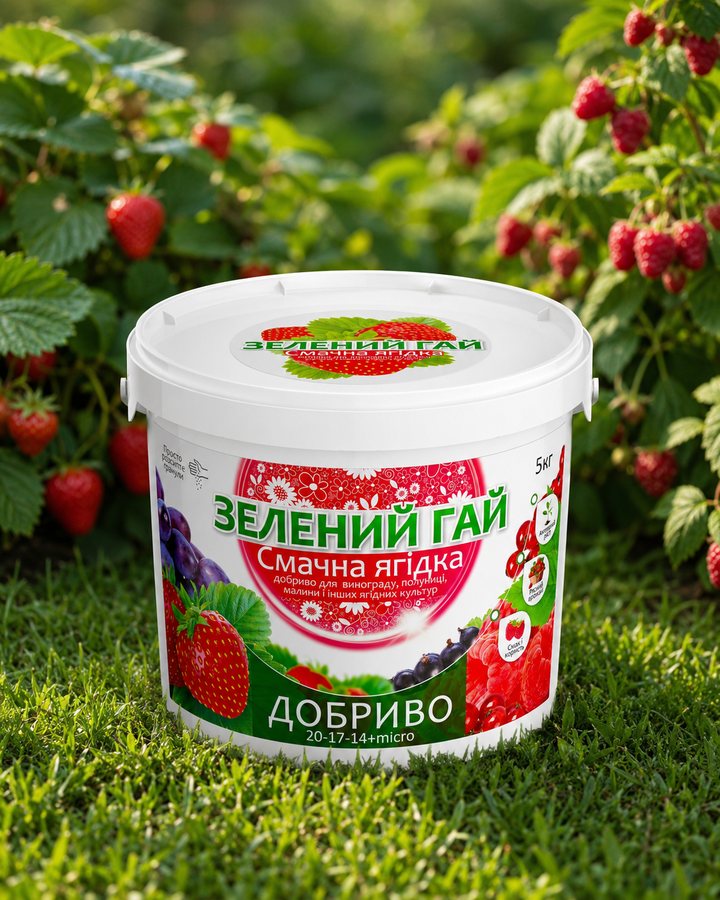
For planned feedings we recommend the granular “Tasty Berry” (NPK 20-17-14 with micronutrients) — for grapes, strawberries and raspberries. It boosts fruit set, berry size and flavour. It is given in the first three stages: at the start of growth, before flowering and after flowering.
- young bush — 25 g (1 scoop);
- mature fruiting vine — 60 g.
Where to apply
Not right under the trunk. The active roots of a mature vine are some distance away, so the fertiliser is scattered in a circle about half a metre from the trunk or into a shallow circular furrow, covered over and watered generously. The soil must be moist before application. On slopes and light sandy soils it is better to split the rate into portions so the rain doesn't wash the nutrients away.
Solution and foliar spraying
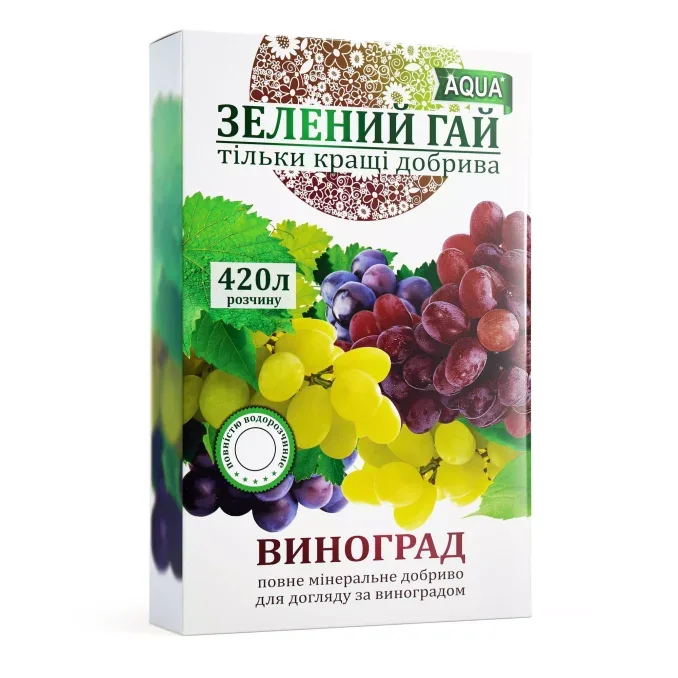
The water-soluble “Aqua Grape” gives a fast effect, especially as a foliar spray: grape leaves are large and absorb the solution well. The solution is prepared according to the dosage on the pack; spray in the evening, wetting the underside of the leaf too. This method is convenient before flowering and during berry growth, and also when the leaves show a nutrient deficiency.
Ripening: potassium instead of nitrogen
When the berries start to soften and change colour, nitrogen is no longer needed. It delays ripening, makes the berries watery and more sour, and the shoots keep growing instead of maturing. In this period grapes need potassium and phosphorus — for sugar accumulation and vine maturing.
Autumn feeding
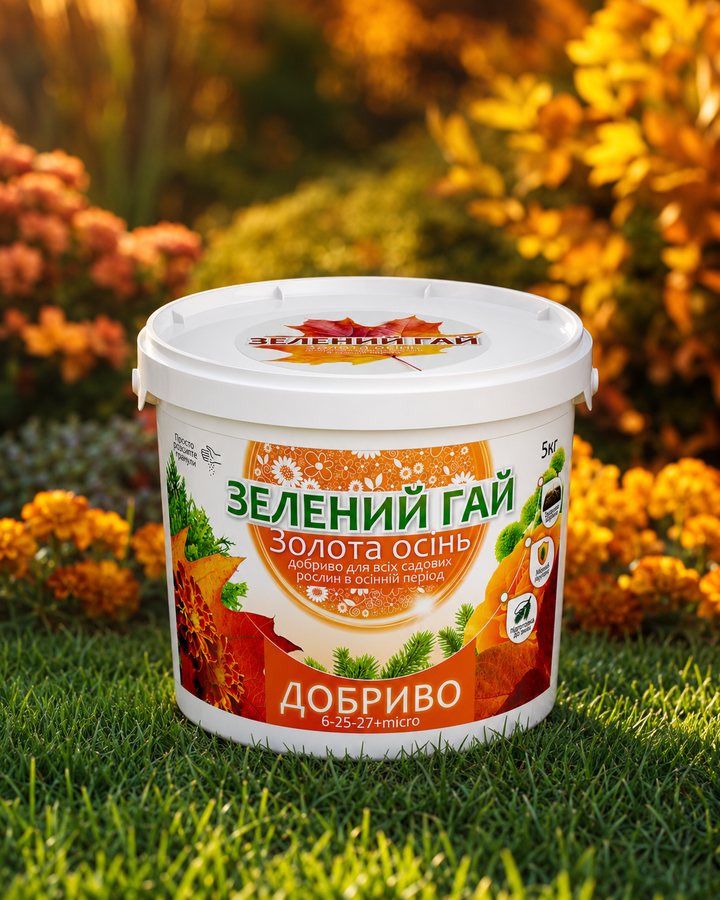
After harvest, in September — early October, give the grapes the autumn feeding “Golden Autumn” (NPK 6-25-27): little nitrogen, a lot of phosphorus and potassium. It strengthens the roots and helps the vine and buds, which carry next year's crop, prepare for winter. The rate is 60 g per mature vine, 25 g per young one, applied the same way — in a circle around the trunk. After application — a generous moisture-charging watering. Why autumn needs exactly phosphorus and potassium is explained in the article on autumn feeding.
The main warning: do not give grapes nitrogen in September. The vine will start growing, the wood won't have time to mature, and in winter you will lose both the shoots and the buds of next year's crop.
Signs of deficiency on the leaves
- Marbling of old leaves — pale areas between green veins on the lower leaves in the second half of summer. A typical sign of magnesium deficiency, especially on light soils and on shoots with heavy bunches.
- Yellow young leaves with green veins — chlorosis from iron deficiency, most often on limy soils.
- Browning and drying of the leaf edges — may mean potassium deficiency, but drought looks the same.
- Poor pollination, “millerandage” of berries — boron deficiency is among the causes, but more often cold rainy weather during flowering and excess nitrogen are to blame.
How to tell apart deficiencies of individual micronutrients is explained in the article on micronutrients. All “Zelenyi Hai” granular fertilisers contain MgO, Fe, Mn, B, Cu, Zn, Mo and Co.
What fertiliser will not do
- It won't protect against downy and powdery mildew — these fungi need separate products.
- It won't enlarge the berry in a variety where it is small by nature.
- It won't fix the consequences of cold, rainy flowering.
- It won't save a vine that is constantly waterlogged: grapes don't like wet roots.
Frequently asked questions
Can fertiliser be applied under grapes dry, without watering?
No. The granules must land on moist soil and be watered in after application: otherwise the nutrients won't reach the roots, and on the surface of dry soil the granules will lie for weeks.
Do young grapes need feeding in the year of planting?
If the planting hole was well prepared, in the first year the vine usually has enough reserves. Feeding starts from the second year or when growth is weak.
How many times per season should mature grapes be fed?
The basic scheme is three feedings with granules in the first half of summer (start of growth, before flowering, after flowering) and one in autumn. Foliar spraying with a solution supplements them but does not replace root feeding.
Grapes on light sandy soil turn yellow earlier than the neighbour's. Why?
Sandy soils hold nutrients poorly, especially potassium and magnesium, and rain quickly washes them down. On such plots it is better to split the rate into smaller portions and apply more often, and to mulch the soil so it holds moisture longer.
Can grapes be watered with fertiliser during flowering?
No feeding is done during flowering itself. It is given before flowering, and the next one when the berries have reached pea size.