Gardening tips
Feeding tomatoes in the greenhouse and in open ground
Over a season a tomato goes from seedling to a bush with several trusses of fruit, and its needs change sharply. We go through when and what to feed, how to read the leaves and where fertiliser won't help.
How a tomato's needs change
From planting out to the first flowers, a tomato needs nitrogen and phosphorus: for roots, stem and leaves. With the start of flowering and fruit set, the need for potassium grows — it is responsible for fruit filling, taste and even ripening. Excess nitrogen is harmful in this period: the bush “runs to leaf”, growing foliage instead of fruit.
The difference between a greenhouse and open ground is the pace. In a greenhouse tomatoes grow faster, fruit longer and take more out of the soil, so more feedings are needed there and the season lasts longer. In open ground everything is compressed into a shorter summer.
Feeding calendar
| When | What is happening |
|---|---|
| 2 weeks after planting out | The seedlings have established, growth has started |
| Flowering of the first truss | Fruit set |
| Start of filling of the first truss | The most important moment of the season |
| Then every 10–14 days | Flowering and filling of the following trusses |
| 3–4 weeks before the end of the season | Feeding is stopped |
Before planting out, seedlings are fed separately and more gently; see the article on feeding seedlings. Do not feed right after planting out: the roots need to recover.
What to feed with
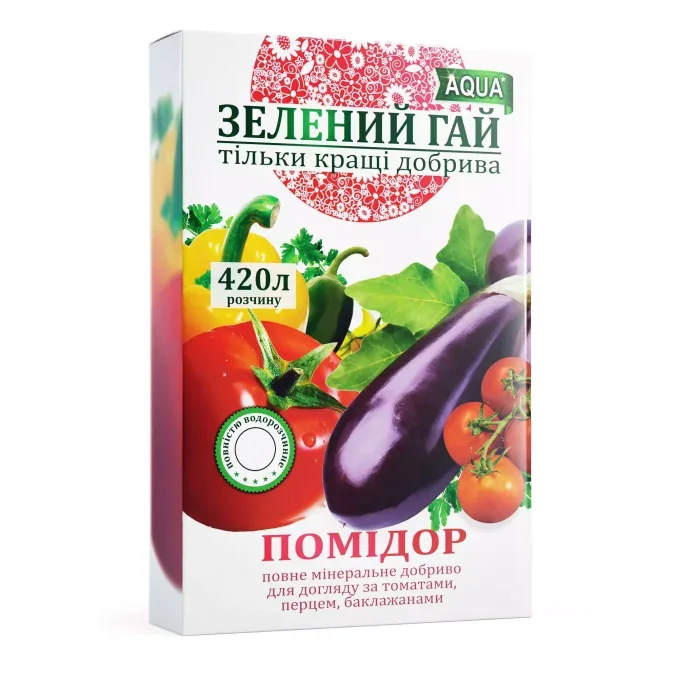
For tomatoes in the greenhouse and in the bed we recommend the water-soluble “Aqua Tomato”. A soluble form suits tomatoes better than granules, because their needs change sharply by phase, and a solution acts fast and is dosed precisely. The solution is prepared according to the dosage on the pack and watered at the root — it can be given instead of one of the regular waterings, without trampling the greenhouse soil an extra time.
- Before feeding, water the bed with plain water: a concentrated solution on dry soil can burn the fine roots.
- Do foliar spraying in the greenhouse in the morning, so the leaves dry by night. Moisture on the leaves at night is a direct route to fungal diseases.
- Do not feed in the heat of midday.
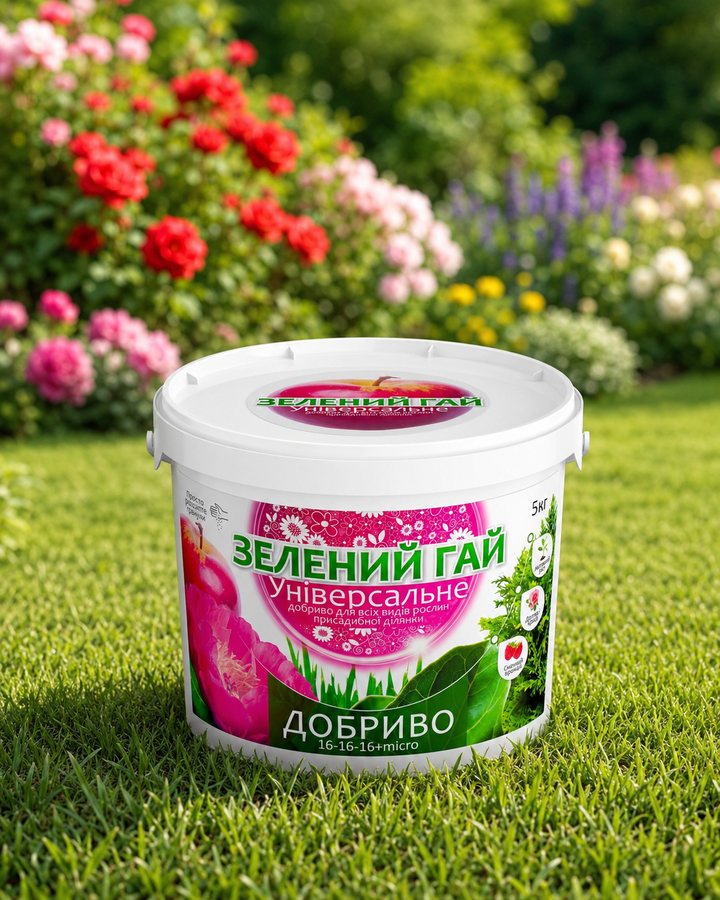
For large vegetable plots, where tomatoes take up several beds in open ground, granular “Universal” (NPK 16-16-16) can be applied when preparing the bed — 25 g per 1 m² on moist soil, worked into the top layer. Then during the season they are fed with a solution.
What the leaves say: signs of deficiency
| Symptom | Likely cause |
|---|---|
| Lower leaves evenly pale and turn yellow, the bush is weak | Nitrogen deficiency |
| Underside of the leaves and veins are purple | Phosphorus deficiency, more often — cold soil in which phosphorus is not absorbed |
| Edges of old leaves turn brown and dry out, fruit ripens in patches | Potassium deficiency |
| Yellowing between the veins on old leaves, veins green | Magnesium deficiency |
| Young leaves at the top turn yellow, veins green | Iron deficiency |
| Thick stem, curled top, lots of leaves, little fruit set | Excess nitrogen |
Magnesium and iron deficiencies are covered in more detail in the article on micronutrients. Remember that similar symptoms are also caused by diseases, lack of light and overwatering, so check the conditions first.
Blossom-end rot: not fertiliser, but watering
A dark dry patch at the tip of the fruit is blossom-end rot. It is linked to calcium, and that is true, but only half true. Most soils have enough calcium; the problem is that it does not reach the fruit. Calcium moves through the plant with the flow of water, and when the soil alternately dries out and gets flooded, a fast-growing fruit is left without it.
What helps:
- even watering without drying out — especially in a greenhouse;
- mulch that holds moisture;
- ventilating the greenhouse in hot weather;
- moderate nitrogen: an overfed bush with large leaves “intercepts” water and calcium from the fruit.
Affected fruit does not recover — remove it. New fruit, once watering is sorted out, grows healthy.
What makes feeding effective
- Even watering. Fertiliser is absorbed only from moist soil. In a greenhouse, water less often but deeply, with warm water, in the morning.
- Mulch. Straw, grass clippings or agrofibre hold moisture, even out soil temperature and protect the lower leaves from splashes during watering.
- Side-shoot removal. Extra side shoots take nutrients that could go to the fruit. Tall tomatoes in a greenhouse are trained to one or two stems.
- Removing the lower leaves. When the first truss has started ripening, the leaves below it are gradually removed — this improves air flow and reduces the risk of disease.
- Ventilating the greenhouse. In hot weather an unventilated greenhouse overheats, the flowers drop, and feeding doesn't help.
What fertiliser will not do
- Late blight — brown wet spots on leaves and fruit in damp weather — is a fungus. A fungicide, ventilation and removal of affected leaves are needed. A bush overfed with nitrogen gets sicker.
- Flower drop in the heat. At very high temperatures the pollen becomes sterile and the flowers drop. Shading and ventilation help, not feeding.
- Cracks in the fruit most often appear after heavy watering or rain following a drought — again a matter of evenness.
If you suspect you have already overdone the fertiliser, the signs and what to do are described in the article on overfeeding.
Frequently asked questions
Why do greenhouse tomatoes turn yellow from the bottom?
The lower leaves turn yellow for several reasons: natural ageing in the shade of the upper tiers, nitrogen or magnesium deficiency, overwatering and the onset of fungal diseases. Look at the pattern of the yellowing using the table above and at the state of the soil — whether it is constantly wet.
Can peppers and aubergines be fed with the same fertiliser?
Yes. They are relatives of the tomato from the same nightshade family, with a very similar feeding rhythm.
Can tomatoes be fed with manure or bird droppings?
Fresh organic matter gives a lot of nitrogen, and the bush easily “runs to leaf”: leaves grow, but little fruit sets. Besides, the dose in such infusions cannot be controlled. Well-rotted compost is better worked into the soil when preparing the bed, and during the season feed with a balanced solution.
When to finish feeding?
Three to four weeks before the end of the season: fruit that has already set will ripen, and new fruit won't make it anyway.