Gardening tips
How to make compost on your plot
A heap of grass, leaves and kitchen peelings turns in a year or two into dark, crumbly earth that smells of the forest. We explain how to build it properly, what not to put in it and why compost does not replace feeding.
Where to put the heap and what to make it in
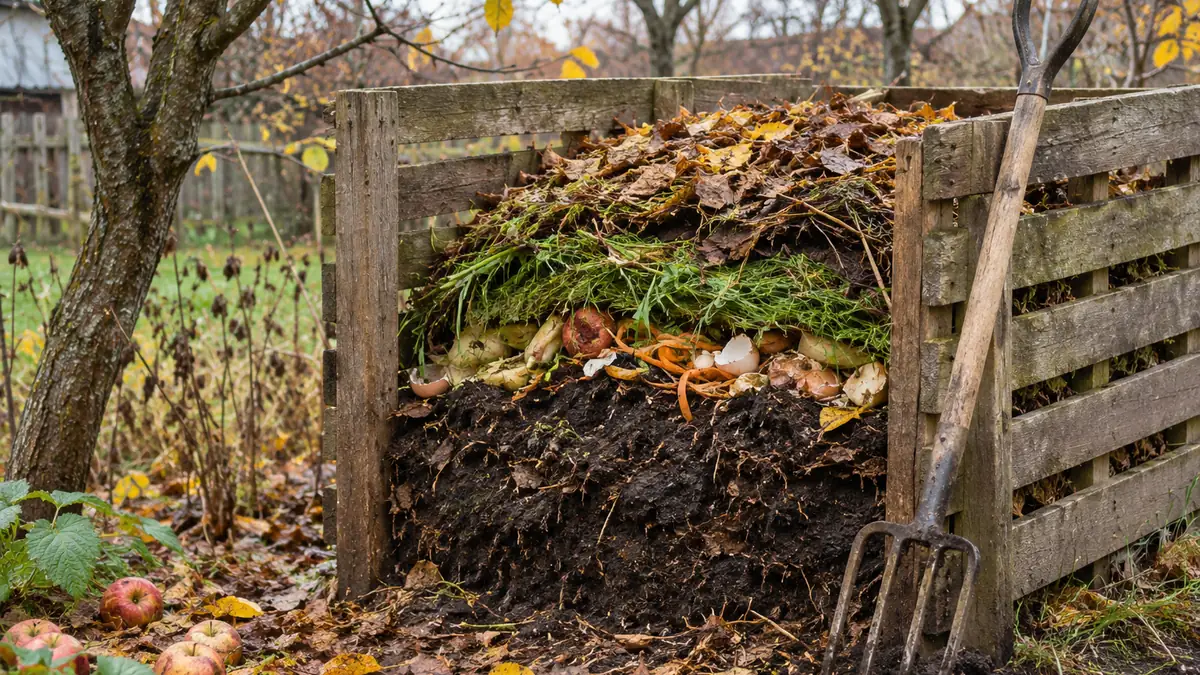
Compost is made by bacteria, fungi, worms and other small soil creatures. They need food, air and moisture, and all the gardener has to do is make sure there is enough of each. The heap goes on bare earth, not on concrete or plastic sheeting, so worms can get in from below and excess water drains away. Partial shade is the best spot: in the sun the heap dries out, and in deep shade and damp it turns sour.
The simplest option is a box knocked together from boards or mesh with gaps for air, about a metre by a metre and up to a metre high. A smaller heap does not warm up well, and in a taller one the bottom layer packs down with no air. Two sections are handy: you put fresh material into one while last year's matures in the other.
What to put in and what not
The material falls into two groups. Green is juicy, rich in nitrogen and rots quickly. Brown is dry, rich in carbon, breaks down slowly and keeps the heap loose.
| Green (nitrogen) | Brown (carbon) | Keep out |
|---|---|---|
| grass clippings, weeds without seeds | dry leaves, straw, hay | meat, fish, bones, fat |
| vegetable and fruit peelings | shredded branches, wood chips | dairy products, cooked food |
| coffee grounds, used tea leaves | unprinted cardboard and paper | diseased plants, blight-infected haulm |
| tops of healthy plants | sawdust from untreated wood | couch grass roots, weeds with seeds |
| well-rotted manure | pine needles in small amounts | cat and dog droppings, glossy paper, painted wood |
By volume you put in more brown, roughly two to three parts to one part green. If the heap smells of ammonia or rot, it has too much green and too little air: add dry leaves or straw and fork it over. If it is dry and sits unchanged for years, add grass and water.
How to build the heap in layers
- Lay coarse material on the bottom, such as shredded branches or sunflower stalks. It leaves space for air underneath.
- Then alternate brown and green layers 10–20 cm thick. Chop up large pieces, because a whole cabbage stalk or a branch will lie there for years.
- Every few layers, throw in a spadeful of garden soil or finished compost so the heap gets bacteria.
- Water the layers if they are dry. The moisture should be like a wrung-out sponge: a handful of the heap feels damp, but no water drips from it.
- Cover the top of the heap with a layer of straw, an old rug or a breathable material so it does not dry out or get soaked by downpours.
How long compost takes to mature
The time depends on how much you look after it. A heap that is simply built and left alone matures in a year or two. This cold composting takes no work, but weed seeds and disease organisms in it do not die.
Hot compost comes from building a large heap in one go with the right mix of green and brown. Within a few days the inside heats up to 50–60 °C or more. If you turn it with a fork every few weeks, moving the edges into the middle each time, the compost can be ready in a few months: from spring to autumn. Strong heat kills most weed seeds, but still keep out blight-infected haulm and plants with clubroot.
Finished compost is dark, loose and crumbly and smells of forest soil. You can no longer recognise the leaves and grass in it, apart from the odd bit of branch, which can be sieved out and put back into a new heap. Unripe compost that smells of rot is not put around plants, because it takes nitrogen from the soil while it breaks down.
What compost gives and what it lacks
Compost mostly works on the soil. It makes clay looser and helps sand hold water, feeds worms and soil life, and releases nutrients slowly over the season. As a mulch it keeps moisture in and holds back weeds.
As a feed, compost is weak and unpredictable. It contains little nitrogen, phosphorus and potassium, and how much depends on what you put in. A heap of grass and peelings gives one thing, a heap of leaves and straw another, and no gardener knows how much nitrogen is in their bucket of compost. It is often short of potassium, and the only trace elements in it are those that were in the material. So on poor soil, plants grown on compost alone do worse than you expect. Organic and mineral fertilisers are compared in detail in the article on mineral and organic fertilisers.
How to combine compost and mineral fertilisers
Compost and mineral fertilisers do different jobs, so they are used together. In autumn or spring compost is spread over beds and borders a few centimetres deep and worked into the top layer, or left as a mulch under shrubs. Feeding at the right stages comes from mineral fertilisers with a known composition.
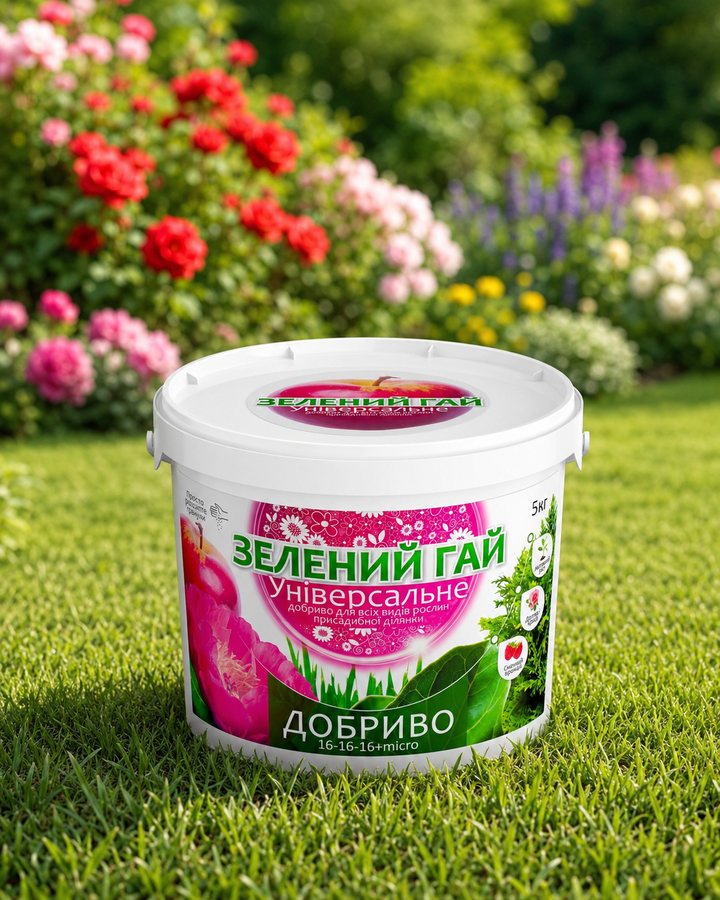
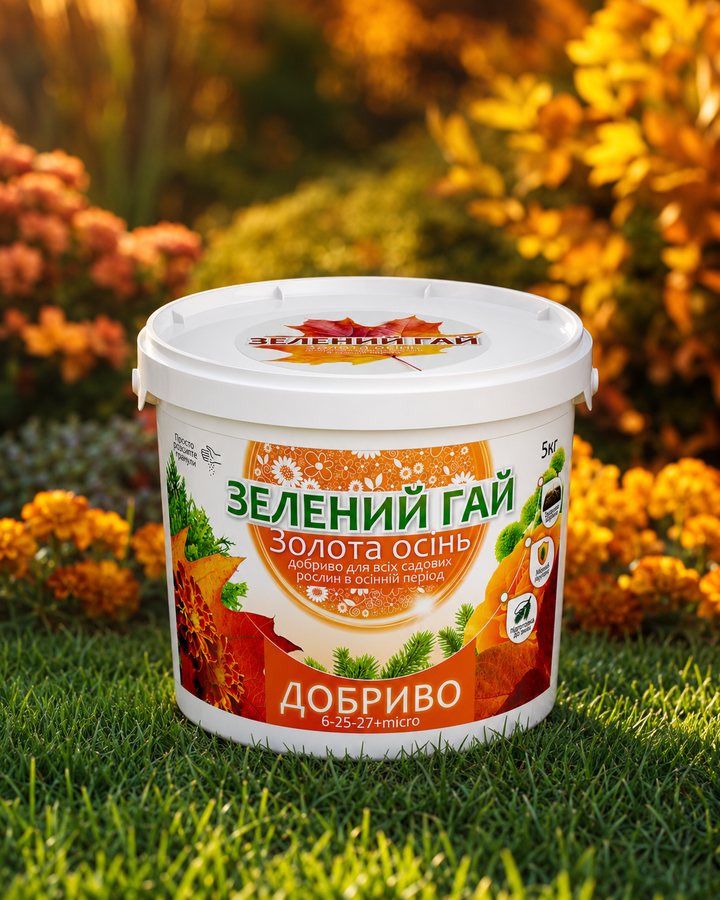
In spring, for flowers, shrubs, trees and the lawn, “Universal” with NPK 16-16-16 and the trace elements MgO, Fe, Mn, B, Cu, Zn, Mo, Co does the job. Its rate is 25 g (1 scoop) per 1 m² or per bush, and 60 g under mature shrubs and trees. Scatter the granules over moist soil, mix them into the top layer and mulch with compost on top: under mulch the soil stays moist longer and the granules dissolve more evenly. In autumn, when nitrogen is no longer needed, use “Golden Autumn” with NPK 6-25-27. If a bed has been given plenty of compost, the first nitrogen feed can be reduced.
Frequently asked questions
Can walnut leaves go into compost?
Yes, in a mixed heap, in small amounts together with other material. They break down slowly, so it is better to shred them.
Can mineral fertilisers be added to the heap?
A small handful of nitrogen fertiliser on a layer of straw or leaves speeds up decomposition when the heap is short of green. But it is simpler to add grass clippings.
Is compost suitable for blueberry and hydrangea?
Ordinary compost is neutral or slightly alkaline, so acid-loving plants get it with care. A mulch of pine bark and pine needles suits them better.