Gardening tips
Summer feeding
Summer splits into two halves. Until mid-July the garden is still growing and nitrogen is good for it; after that, some plants are already preparing for winter, and the same nitrogen does harm. We look at who to keep feeding and who to stop feeding.
The main summer boundary is mid-July
For all perennial garden plants — trees, shrubs, roses, conifers, hydrangeas, berry bushes — mid-July is the last moment for nitrogen feeding. Nitrogen drives growth. Shoots that grow at the end of summer do not have time to turn woody before the frosts: they get frost-damaged in winter, and the plant spends on them the strength it needs for setting buds and overwintering.
This boundary does not apply to annual plants. Vegetables in beds and in the greenhouse, annual flowers in the flowerbed, petunias in hanging baskets will not overwinter, so they are fed on their own schedule until the end of fruiting or flowering. The full month-by-month schedule is in the garden feeding calendar.
June to the first half of July: what you can do
| Plants | What is happening | What to do |
|---|---|---|
| Roses | First flush of flowering | Feeding after the first flush — for repeat flowering |
| Hydrangeas | Budding, flowering | Third and last feeding of the season — in the first half of July |
| Conifers | Main growth | Second application, if not done earlier |
| Fruit trees | Fruit swelling, bud setting | Last balanced feeding |
| Strawberries | End of fruiting | Feeding right after harvest |
| Raspberries, currants, gooseberries | Berry picking | Feeding after picking, before mid-July |
| Lawn | Summer growth | Moderate feeding if the lawn turns pale |
Strawberries are a special case: after harvest they set the flower buds for next year. Skipping this feeding means a smaller harvest in future.
Second half of July and August: what you should no longer do
- Do not give nitrogen formulas to shrubs, trees, conifers, roses, hydrangeas and berry bushes. No high-nitrogen granules, no lawn fertilisers under shrubs, no fresh manure.
- Do not stimulate growth by pruning. Hard pruning at the end of summer also provokes new shoots that will not have time to ripen.
- Do not feed plants under stress. Feeding does not cure drying out, scorch or disease. First water and shade, then nutrition.
If a plant looks hungry after mid-July — pale leaves, weak growth — it is better to wait for August and give an autumn low-nitrogen formula than to risk late growth.
Who keeps being fed
In summer, regular feeding continues for:
- tomatoes, peppers, cucumbers, aubergines — throughout fruiting;
- annual flowers in the flowerbed — once every two to three weeks while they are flowering;
- petunias, surfinias and other flowers in hanging baskets — often, because in a small volume of soil the nutrients run out quickly;
- chrysanthemums — in July and August they set the buds for autumn flowering;
- everbearing varieties of strawberries and raspberries — with balanced nutrition until midsummer, then with formulas without excess nitrogen.
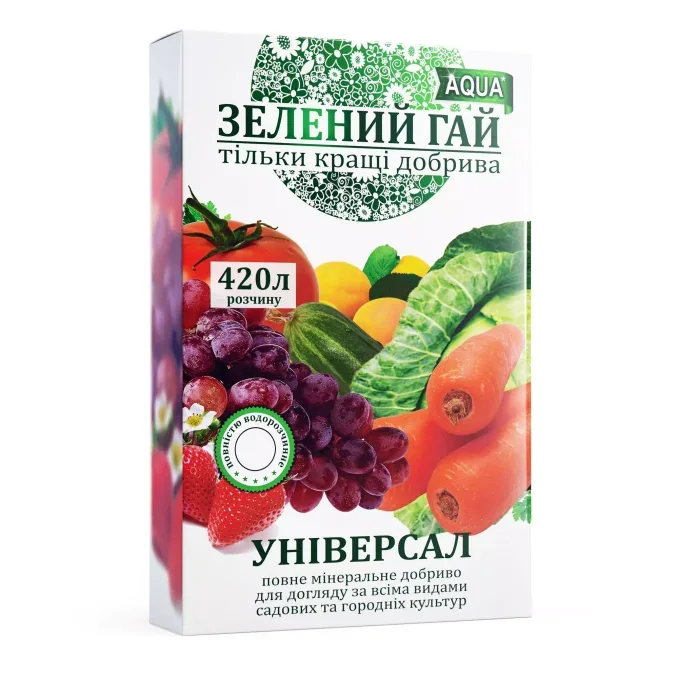
For annuals and vegetables, water-soluble fertilisers are convenient in summer: they act faster than granules and combine easily with watering. For example, “Aqua Universal” suits flowers, shrubs and the vegetable garden: the powder is dissolved in water at the dosage on the pack and watered at the root or sprayed on the leaves.
How to feed in the heat
Most summer mistakes are linked not to the choice of fertiliser but to the weather.
- Water first. Fertiliser is not applied to dry hot soil — neither granules nor solution. Concentrated salts next to dry roots burn them.
- Morning or evening. During the day in the heat plants close their stomata and absorb nutrients poorly, and drops of solution on the leaves can leave burns.
- Spraying — only in cloudy weather or in the evening, and not on flowers or on berries that are swelling.
- Mulch. A layer of mulch preserves soil moisture and temperature — granules under it dissolve more evenly.
- Do not raise the dose. In the heat a plant drinks more, it does not eat more. The rate stays the same. The signs of fertiliser burn are described in the article on overfeeding.
Hunger or heat: how not to confuse them
In summer plants often look bad not because of a lack of nutrition. Before reaching for fertiliser, look more closely.
- Leaves wilt during the day and recover in the evening — this is a reaction to heat, not hunger. Deep watering and mulch will help.
- Dry brown edges and spots on leaves facing the sun — sunscald or drying out.
- Old lower leaves pale evenly, growth is short — looks like nitrogen deficiency. Before mid-July an ordinary feeding corrects it.
- Young leaves turn yellow while the veins stay green — iron deficiency, more often due to alkaline soil or hard water than to a lack of fertiliser.
- Coating, spots, webbing — diseases and pests that fertiliser does not cure.
August: autumn begins
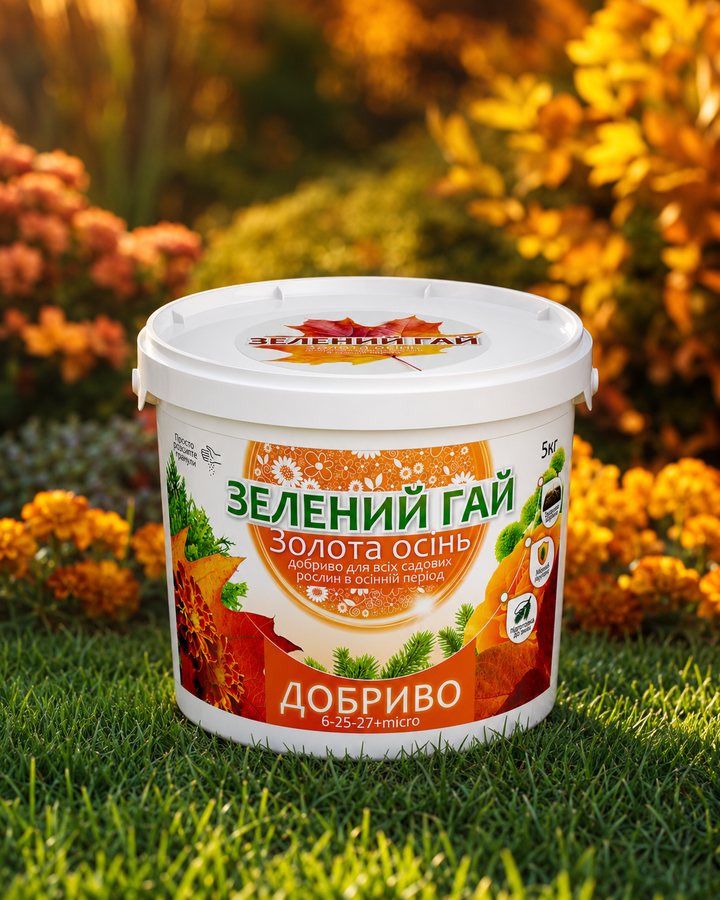
From August a window for autumn feeding of perennial plants opens, and it lasts until the first half of October. The goal is no longer growth but roots, ripening of shoots and winter hardiness. For this, formulas low in nitrogen and high in phosphorus and potassium are used — for example, “Golden Autumn” with NPK 6-25-27 for all garden plants. Conifers, lawns and acid-loving plants get special autumn formulas. Why nitrogen is harmful in autumn and how to apply autumn fertilisers is covered in detail in the article on autumn feeding.
August is the best month for autumn feeding of conifers and acid-loving plants, which finish growing early. Lawns, shrubs and trees can be given it in September.
Frequently asked questions
Can I feed the lawn in July and August?
A lawn grows all season, so moderate feeding in summer is acceptable if the grass is turning pale. Apply only to moist soil, after mowing, with watering. In strong heat and drought it is better to wait.
My rose is still flowering in August. Should I feed it?
Not with nitrogen. The repeat flowering is already set. From August the rose is switched to an autumn formula.
I missed all the spring feedings. Can I make up for it in summer?
Before mid-July — yes, at the normal rate. After that — only autumn formulas: late nitrogen will do more harm than good.