Gardening tips
Feeding chrysanthemums
A chrysanthemum flowers when the rest of the garden is already fading, and because of this it is most often fed at the wrong time. We explain when nutrition really determines autumn flowering and why it is too late to feed a plant that has already opened its flowers.
The key point: a chrysanthemum sets buds in summer
The chrysanthemum is a short-day plant. It starts setting buds when the nights get longer, that is, at the end of summer. Hence the key conclusion: how lavishly it flowers in October is determined by feeding in July and August. Feeding a plant that has already opened its flowers changes very little — the plant allocated its resources earlier.
Because of this, the chrysanthemum's feeding schedule is shifted compared with most flowers. In spring it is fed for growth, in summer for bud setting, and from the moment the buds show colour, feeding for growth is stopped.
Feeding calendar
| Period | Goal | What to do |
|---|---|---|
| April–May, regrowth | Build up the plant | Granules around the plant, then a solution once every two to three weeks |
| June | Branching after pinching | Regular solution feeds |
| July–August | Bud setting — the most important period | Solution feeding once every two to three weeks |
| Buds show colour | Flowering | Watering only, stop feeding for growth |
| After flowering | Overwintering | Pruning, mulch |
What to feed with
In spring — granules
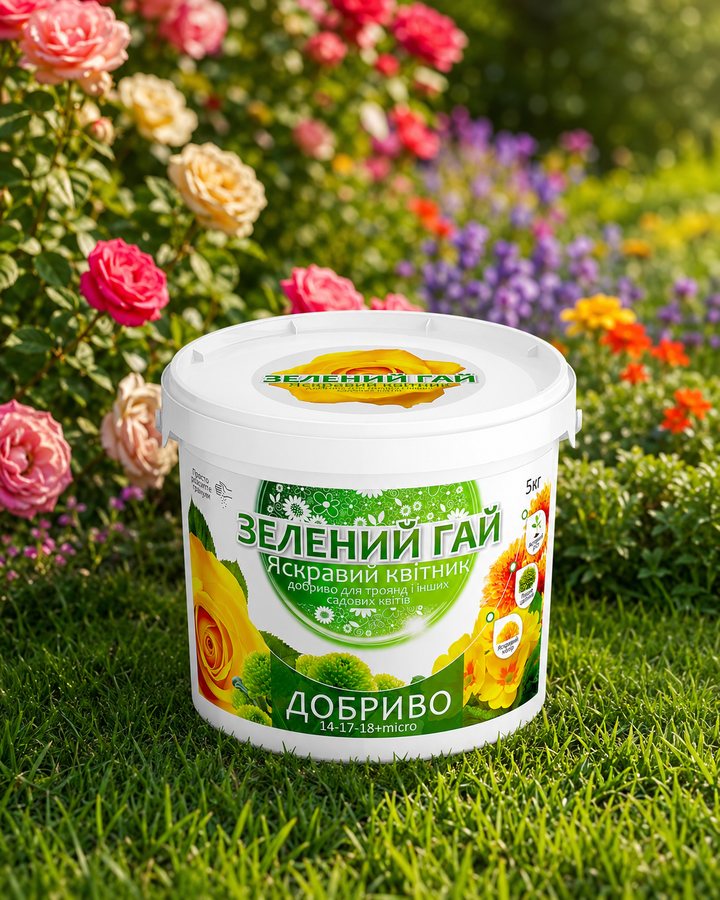
When the overwintered plant starts growing, granular “Bright Flowerbed” with NPK 14-17-18 is scattered around it — 25 g (1 scoop) per plant or per 1 m² of planting. The granules are lightly worked into the soil and watered in. This fertiliser has more phosphorus and potassium than nitrogen, so the plant grows compact rather than stretched.
In summer — a solution
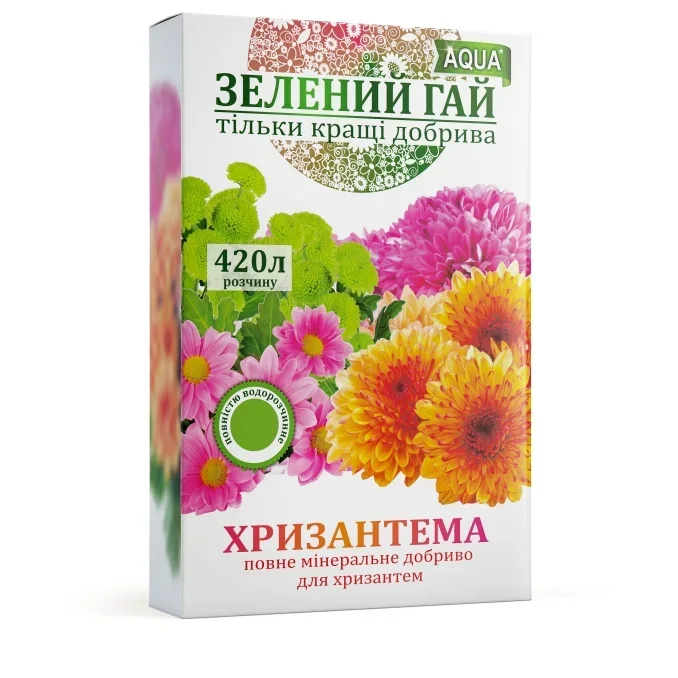
Water-soluble “Aqua Chrysanthemum” is intended for regular feeds during growth and bud setting. The powder is dissolved in water according to the dosage on the package and poured under the plant onto moist soil. The schedule is roughly once every two to three weeks from May; July and August must not be skipped.
Excess nitrogen harms a chrysanthemum: the shoots come out long and soft, the plant flops, and there are fewer buds. Do not feed chrysanthemums with lawn fertilisers or fresh manure. Why the balance of nitrogen with phosphorus and potassium matters for flowers is explained in the article about NPK.
Pinching: fertiliser does not work without it
Feeding and pinching work as a pair. Feeding a plant that was not pinched means getting a tall, sprawling plant with few flowers at the tips.
- The first pinch — when the shoots have grown to about 15–20 cm: pinch out the tip above a few leaves.
- The second — three to four weeks later, on the new side shoots.
- The last pinch is done no later than early summer, otherwise you will cut off the shoots on which buds were meant to form.
A plant that falls apart and flops after rain is almost always the result of not pinching, not of hunger. Tall varieties are also helped by a support.
How to tell that a chrysanthemum lacks nutrition
The most reliable signs are small flower heads compared with the variety description, pale petal colour, short growth and few buds per shoot.
But the plant going bare at the bottom — when the lower leaves turn brown, dry and drop — is not always hunger. A chrysanthemum also sheds its lower leaves from drying out, overcrowding and natural ageing. So check watering first: a chrysanthemum likes evenly moist soil, especially in the heat when buds are being set. Mulch around the plant helps retain moisture.
Another common reason for weak flowering is the location. A chrysanthemum needs sun for at least half the day; in shade it stretches, flowers later and more sparsely, and extra fertiliser will not fix that. If a plant has been growing in the same place for several years, the soil under it becomes exhausted and the plant itself gets overcrowded: young shoots compete with one another, and the flowers become smaller. Dividing the plant in spring and replanting it in a fresh spot with prepared soil helps here.
Finally, chrysanthemum leaves are often affected by powdery mildew, septoria and other leaf spots, as well as aphids and mites. Spots, coating, curled leaves are not signs of hunger but a reason to inspect the plant and, if needed, treat it with plant protection products according to the instructions. A healthy, evenly fed plant gets sick less often, but fertiliser by itself does not cure disease.
Chrysanthemums in pots
Chrysanthemums bought already flowering in September need practically no feeding: they are fully formed and need coolness, light and watering. They are worth feeding the following season if you planted the plant out in the garden and it survived the winter.
Chrysanthemums that grow in pots on a terrace all season are fed with a solution on the same calendar as garden ones. Granules are not put into a pot: in a container salts are not washed out, and the concentration near the roots rises quickly.
Autumn and overwintering
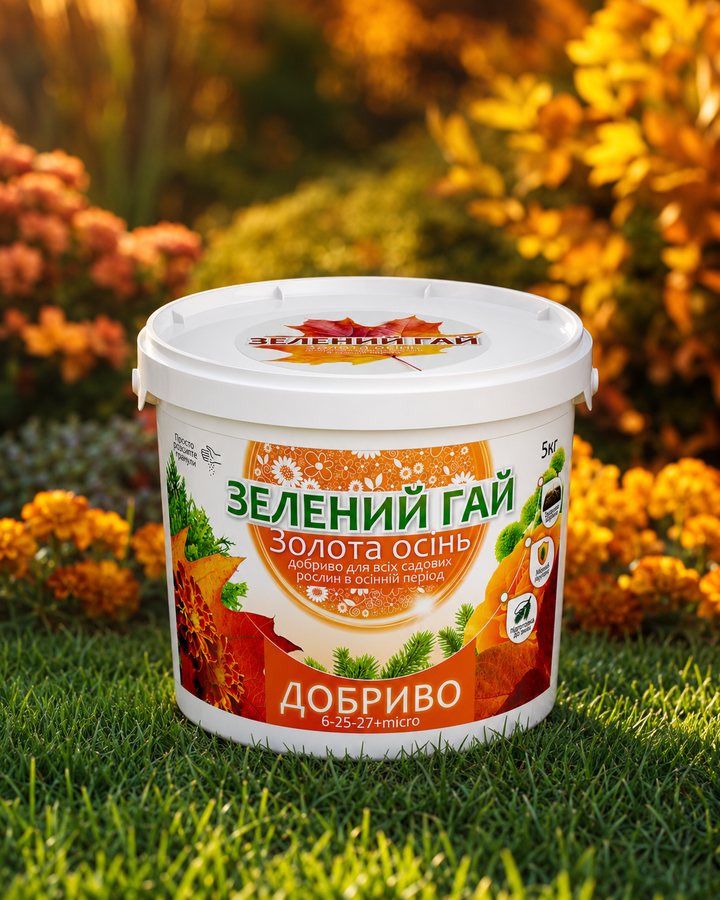
For garden chrysanthemums autumn is flowering time, so the classic autumn feed has a peculiarity here. If the plant is still in bud at the end of August or in September, you can apply a small portion of “Golden Autumn” with NPK 6-25-27: it is low in nitrogen, so it does not push growth, while phosphorus and potassium help the root system prepare for winter. The working window for such formulas is until the first half of October, while the soil is warm.
After flowering and the first frosts, the stems of hardy small-flowered chrysanthemums are cut, leaving low stumps, and the base of the plant is mulched. A chrysanthemum's main enemy in winter is not frost but wet soil, in which the rhizomes rot, so drainage is important on heavy clay. Large-flowered varieties often do not survive winter in open ground: they are dug up and kept in a cool room until spring. General rules for autumn feeding — in the article on autumn feeding.
Frequently asked questions
Can I feed a chrysanthemum while it is flowering?
There is no particular benefit in it: the flowering has already been set. Even watering and coolness matter more.
Why did my chrysanthemum not flower before the frosts?
Most often it is a late variety for your region, shade, or pinching too late. Night lighting from a nearby street lamp can also delay bud setting, because the plant “does not see” the long nights.
How often should plants be divided?
Perennial plants become overcrowded over the years and their flowers get smaller. In spring an old plant is divided into sections with young shoots — this rejuvenates it better than any fertiliser.