Gardening tips
Acidic soil: pH, acid-loving plants and how to acidify the ground
Hydrangea, blueberry and rhododendron get sick in ordinary garden soil not because of a bad fertiliser, but because of the wrong pH. We explain how to find out the acidity of the soil and change it.
What pH is and why you need to know it
pH is a measure of the acidity of the soil solution on a scale from 0 to 14. A value of 7 is neutral, lower is acidic, higher is alkaline. The scale is logarithmic: soil with pH 5 is ten times more acidic than soil with pH 6.
Acidity affects not the “taste” of the soil but the availability of nutrients. The pH determines the form the elements are in: soluble, which the root can take up, or insoluble, which lies there as dead weight. In alkaline soil, iron, manganese and zinc become unavailable — and an acid-loving plant turns yellow even though the ground contains enough of everything. This picture is covered in detail in the article why leaves turn yellow.
Who needs acidic soil
Most garden plants, vegetables and lawn grasses do well in slightly acidic or neutral soil, around pH 6–7. But there is a group for which such soil is too alkaline.
| Plant | Preferred soil | What happens in neutral soil |
|---|---|---|
| Bigleaf hydrangea | Acidic, pH around 4.5–5.5 | Chlorosis, pink instead of blue flower heads |
| Blueberries, cranberries, bilberries | Strongly acidic, around 4–5 | Chlorosis, weak growth, few berries |
| Rhododendron, azalea | Acidic, around 4.5–5.5 | Chlorosis, buds drying out, slow dieback |
| Heather, erica | Acidic | Stunting, chlorosis |
| Conifers (spruces, pines, firs) | Slightly acidic | Usually grow, but worse; in alkaline soil — yellowing needles |
Thujas and most junipers tolerate a wider range, but they too do better without lime. Panicle and smooth hydrangeas are less demanding than the bigleaf hydrangea.
How to determine soil pH at home
Test strips
The most accessible and fairly accurate method. Take soil from root depth — 10–20 cm, not from the surface. Mix it with distilled water (not tap water, which has its own pH), shake well, let it settle and dip the strip into the liquid. Compare the colour with the scale on the package. Take several samples from different places: soil near a foundation or a path can differ significantly from the rest of the plot.
pH meter
An electronic probe gives a quick result, but cheap models are often wrong. Cross-check it against test strips.
Vinegar and baking soda
A rough but visual test. Drip vinegar onto a clod of soil: if it fizzes, the soil contains carbonates, it is alkaline, and acid-loving plants have no place here without preparation. Moisten another sample with water and sprinkle it with soda: fizzing indicates an acidic reaction. This method gives no numbers.
Indicator plants
Weeds hint at what kind of soil is on the plot:
- Acidic soil: field horsetail, sheep sorrel, moss on the soil surface, heather.
- Neutral and alkaline: clover, alfalfa, field mustard, coltsfoot.
A good natural indicator is the bigleaf hydrangea itself: in acidic soil, varieties with naturally blue colouring produce blue flower heads, in neutral or alkaline soil — pink ones. More on this in the article how to change the colour of a hydrangea.
How to acidify the soil
- High-moor peat. Reddish acidic peat is mixed with the soil in the planting hole or in the bed. For blueberries and rhododendrons on alkaline and clay plots, a separate hole or a raised bed made entirely of acidic substrate is often prepared.
- Acidic mulch. Pine bark, conifer needle litter, sawdust from conifers. They act gently and slowly, but constantly, and also retain moisture.
- Sulphur. Garden or colloidal sulphur gradually acidifies the soil with the help of soil bacteria; the effect does not appear immediately, but within a few weeks or months. Take the dose from the product instructions and do not exceed it.
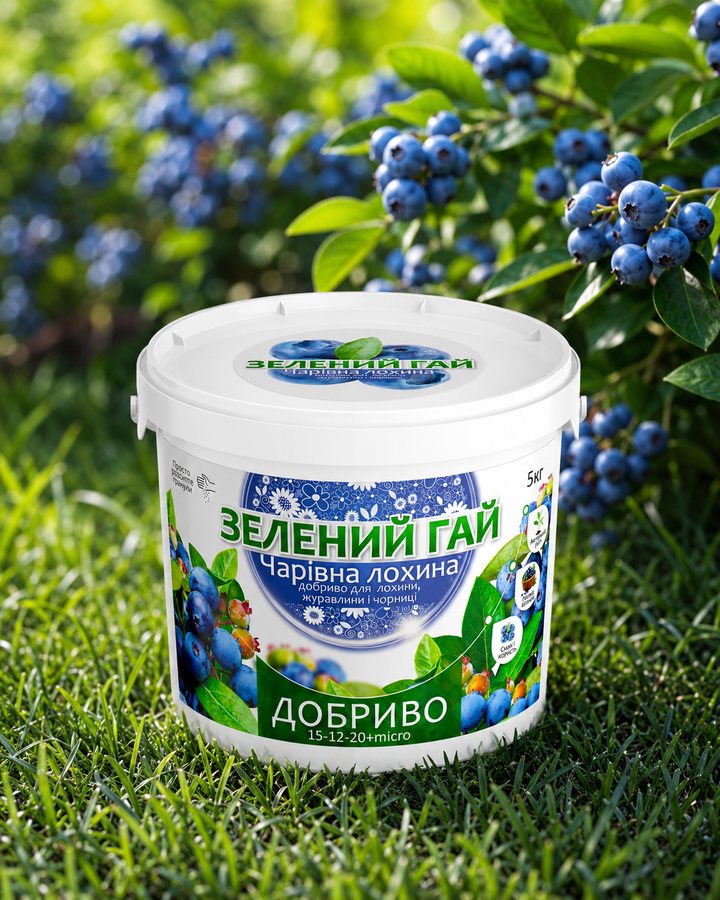
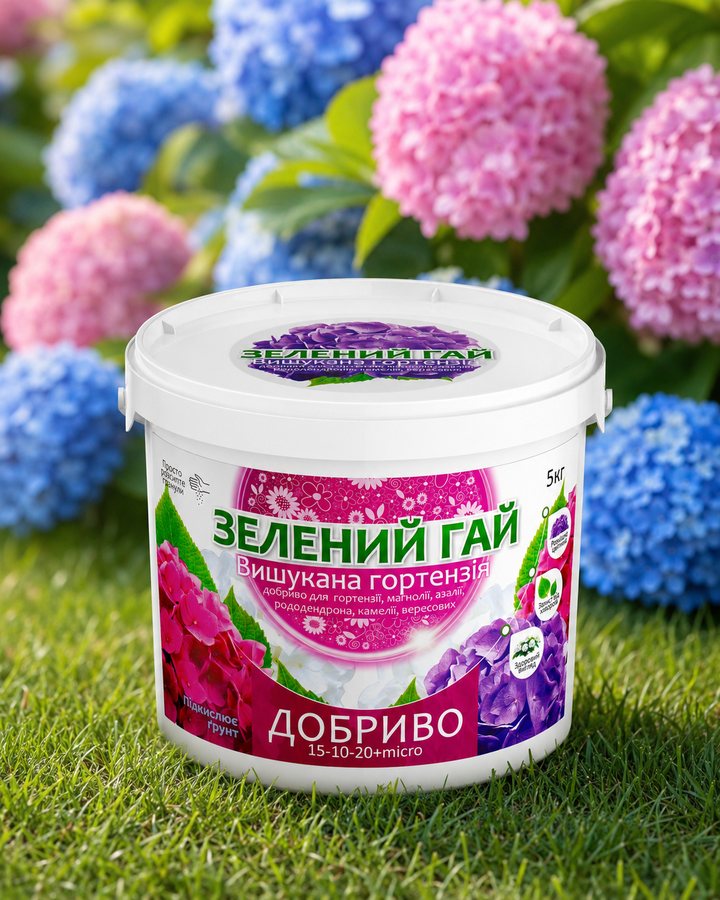
- Acidifying fertilisers. “Exquisite Hydrangea” 15-10-20 acidifies the soil during feeding, and “Magic Blueberry” 15-12-20 maintains an acidic environment for blueberries and heathers. They work as support, not as a one-off correction of strongly alkaline soil.
- Soft water. Hard tap or borehole water gradually alkalises the soil. Water acid-loving plants with rainwater or with water acidified according to the instructions of a special acidifier.
What to avoid near acid-loving plants
- Ash — strongly alkalises the soil.
- Lime, dolomite flour, chalk — intended for the opposite task.
- Construction debris — remnants of concrete and mortar near a foundation keep the soil alkaline for years.
- Ordinary “whole-garden” formulas as the only nutrition — they do not maintain an acidic reaction.
How often to check
pH changes slowly, and it is corrected just as slowly. Check the soil under acid-loving plants once a season — in spring before the first feeding. Do not try to “flip” alkaline soil into acidic in a week: sharp changes harm the roots more than gradual correction. How to feed blueberries throughout the season is explained in the article on feeding blueberries.
Frequently asked questions
Can a hydrangea or blueberry be planted in ordinary garden soil?
It can be planted, but without preparation the plant will most likely start to get sick in the very first season. For blueberries and rhododendrons on neutral and alkaline soils, it is better to make a planting hole with acidic substrate right away, and for a hydrangea — to add high-moor peat and acidic mulch and feed regularly with an acidifying formula.
Do coffee grounds or used tea leaves acidify the soil?
Their effect on pH is small and unpredictable. As organic mulch they do no harm, but relying on them as a way to acidify is not worth it.
Can soil be acidified with vinegar?
Vinegar acts sharply and briefly, and the wrong concentration damages the roots. To acidify irrigation water, it is better to use special products according to the instructions, and for the soil — peat, acidic mulch and sulphur.
How quickly does pH change?
Slowly. Mulch and peat give a noticeable effect within a season, sulphur within a few weeks or months. That is why it is better to prepare the soil before planting than to rescue a plant that is already turning yellow.