Gardening tips
Feeding peppers and aubergines
Pepper and aubergine are warmth-loving relatives of tomato with a slow start and sensitive roots. Here is how to feed them from seedling to fruit and why the flowers often drop not from hunger.
How pepper and aubergine differ from tomato
All three crops are nightshades, and the general logic of feeding is shared: at the start nitrogen and phosphorus for roots and leaves, from the start of flowering more potassium for fruit set and filling. But there are two significant differences that change both the care and the feeding.
The first is warmth. Pepper and especially aubergine truly grow only in warm soil and with warm nights. In the cold the root hardly absorbs anything, and the plant stands still for weeks, no matter how much fertiliser it is given. So the first rule for these crops is: do not feed what is freezing.
The second is the root. Tomato easily grows new roots on the stem and forgives rough transplanting. Pepper and aubergine cannot do that: a damaged root recovers slowly, and after unsuccessful pricking out or planting out the plant may “sit” for two or three weeks. Hence caution with the concentration of the solution in the first days after any transplanting.
Seedlings: a slow start is normal
Pepper and aubergine seedlings grow noticeably slower than tomato seedlings, and owners often try to “speed them up” with fertiliser. That is a mistake: the pace is set by warmth and light, not by nutrition. If the seedlings stretch and turn pale on a dark windowsill, supplementary lighting will help, not nitrogen.
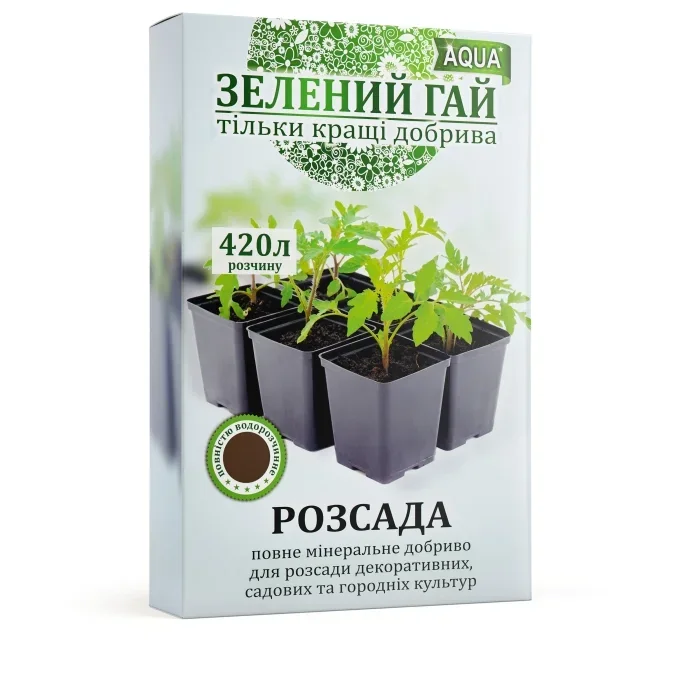
Real hunger looks different: with enough light and warmth growth stops, the lower leaves turn evenly pale, the new ones come out small. Then the seedlings are watered with a solution of “Aqua Seedlings” in place of one of the ordinary waterings — according to the dosage on the pack, only on moist soil. The general rules — when to start, how often, what to do after pricking out — are collected in the article on feeding seedlings; for peppers and aubergines they are the same, with one amendment: prick out as early as possible or sow straight into individual cups, so that transplanting into the ground goes without breaking the root ball.
Preparing the bed
Pepper and aubergine like loose, warm, rich soil with a neutral reaction. The bed is prepared in advance so that it has time to settle and warm up before planting out.
- Rotted compost is added when digging. Fresh manure is not added: it gives too much nitrogen, and the bush builds up leaves instead of flowers.
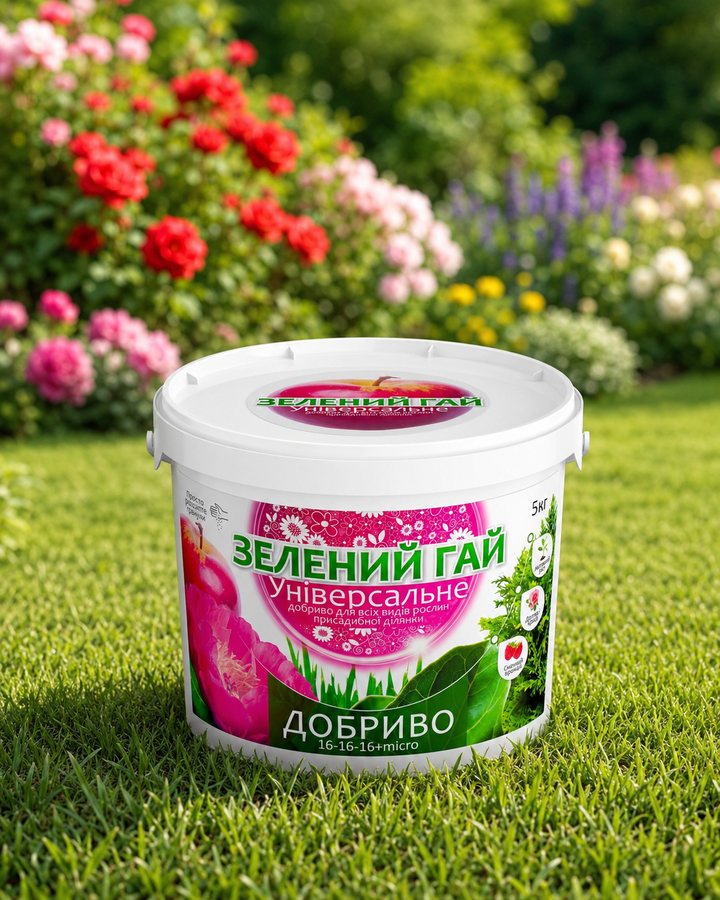
- The mineral base is provided by the granular “Universal” (NPK 16-16-16): 25 g, that is one scoop, per 1 m², evenly over moist soil, mixed into the top layer. Equal shares of the three elements match the starting needs exactly — both for the root and for the leaves.
- The granules are scattered over the whole area of the bed, not into the planting hole under the root: direct contact of concentrated granules with young roots is undesirable.
Planting out and the first weeks
Plant out when the danger of frost has passed and the soil has warmed up. The sign of having hurried is recognisable: the planted seedlings do not die, but for weeks they do not produce a new leaf, and the leaves take on a purple tint — this is how hampered phosphorus uptake in cold soil shows itself. Fertiliser does not help in this situation, warmth does: covering fabric, warm water for watering, mulch after the soil has warmed up.
Do not feed right after planting out. Let the root take hold — the guide here is not the calendar but the appearance of new growth at the top.
From growth to flowering
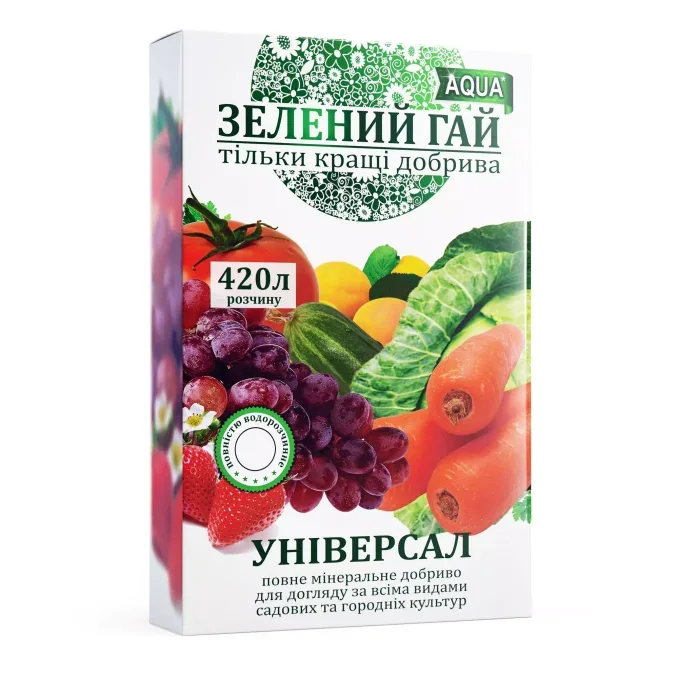
When the plants have established and started growing, switch to regular feeding with a solution. A convenient option is the water-soluble “Aqua Universal”: the solution is prepared according to the dosage on the pack and poured at the root roughly once every two or three weeks through the active season. A solution acts faster than granules and does not need working in, which matters for pepper with its shallow roots: it is not worth loosening the soil deeply near the bush.
A few practical rules:
- water the bed with clean water before feeding;
- do not feed at midday in the heat — better in the evening or in the morning;
- do not increase nitrogen once mass flowering starts: a bush that “runs to leaf” gives dense dark foliage and little fruit set;
- mulch after the soil has warmed up keeps moisture and an even temperature, and for these crops that is no less important than fertiliser.
Why flowers and fruitlets drop
This is the most common complaint, and most often it is not about nutrition. Pepper and aubergine drop their flowers when:
- it is too hot — in severe heat, especially in a greenhouse without ventilation, pollen loses its viability;
- it is too cold at night — pollination does not happen;
- the soil dries out between waterings — the plant gets rid of what it will not be able to feed;
- the bush is overfed with nitrogen — everything goes into the leaves.
Feeding will help here only in the last case, and then in reverse — less nitrogen. The rest need shading, ventilation and even watering.
A dark dry spot at the tip of a pepper fruit is blossom-end rot, the same as in tomatoes. Its cause is usually not a lack of calcium in the soil but uneven watering; the mechanism is explained in detail in the article on feeding tomatoes.
Fruiting and the end of the season
While the fruits are filling, the bush uses the most, so regular feeds continue, but without “shock” doses. Large aubergine fruits and thick-walled peppers form only with stable soil moisture. Pick the fruits on time, at technical ripeness: a bush overloaded with ripening fruits holds back the setting of new ones.
A few weeks before the end of the season feeding is stopped: the fruits that have already set will ripen, and new ones will not make it before the cold.
Frequently asked questions
Can pepper be fed with the same thing as tomatoes?
Yes. Their feeding rhythm is similar, and a specialised tomato fertiliser suits both pepper and aubergines.
Why do pepper leaves curl up like a boat?
Most often from heat and dry air, or because of pests on the underside of the leaf. Check the underside of the leaves before looking for the cause in the fertiliser.
How many granules does a bed need?
The rate is 25 g per 1 m² per application; for a 1 × 5 m bed that is 125 g. For the whole plot, multiply the area by the same rate.