Gardening tips
Granular or water-soluble fertilisers: when to use which
The same formula can be sold in a bucket, in a box of powder and in a bottle. The difference is not in the composition but in how and where the fertiliser works. We explain what to take for your task.
Three forms — three ways of delivering nutrition
In any case a plant takes up nutrients with water: a root cannot “eat” anything solid. So the difference between fertiliser forms lies in how quickly and for how long the nutrients reach the soil solution.
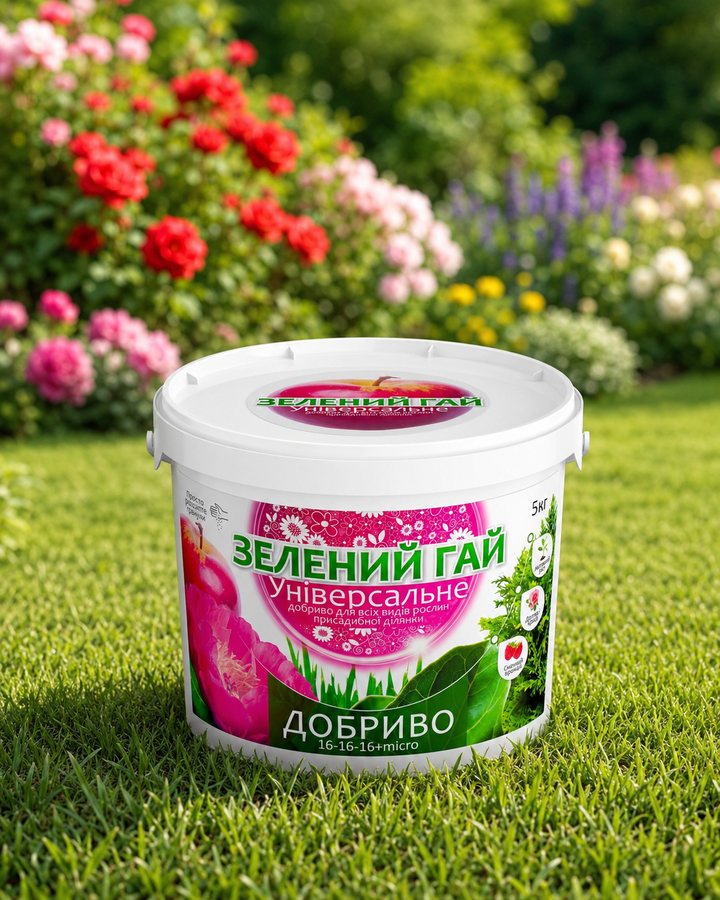
- Granules (5 and 10 kg buckets, 500 g packs) dissolve gradually, with every watering and rain. One application feeds a plant for weeks.
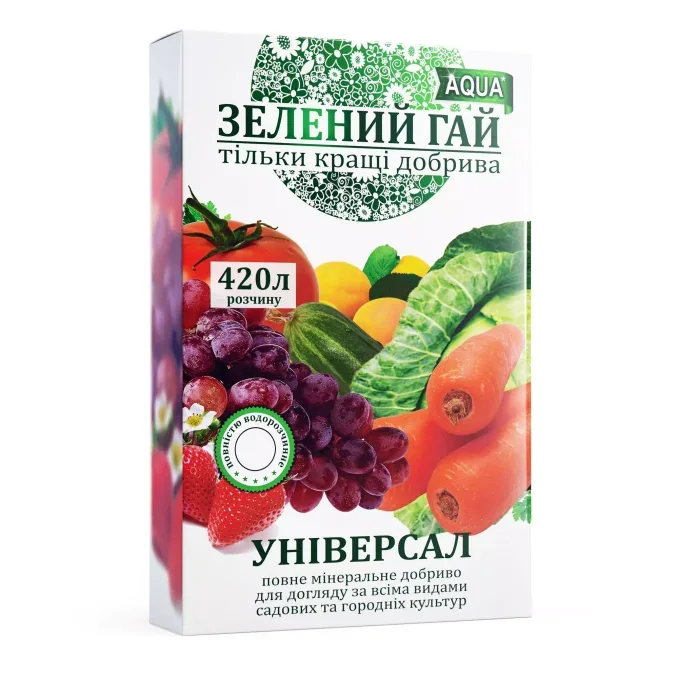
- “Aqua” water-soluble powder (300 g box) dissolves completely in water. Nutrition enters both through the root and through the leaves, so it acts quickly but also runs out sooner.
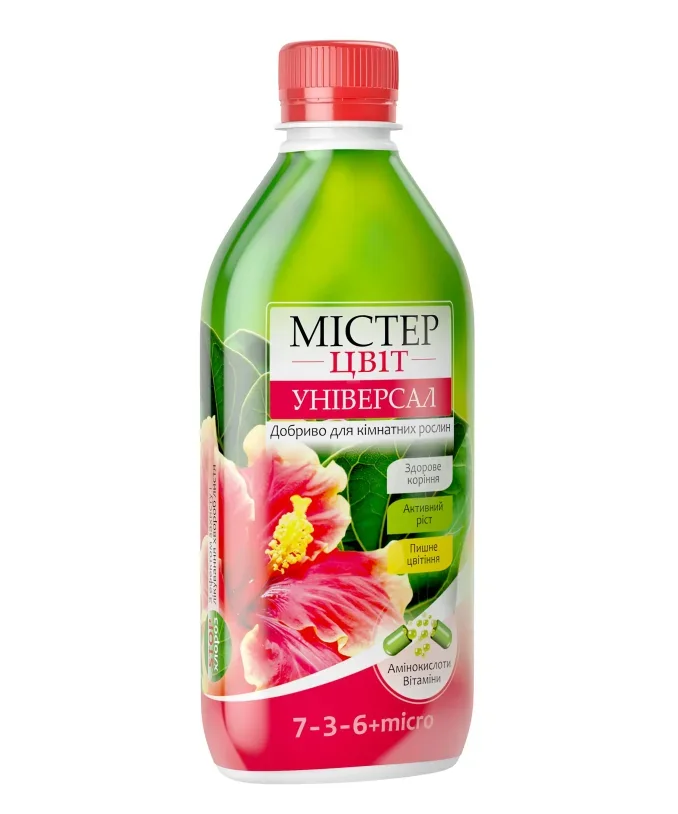
- “Mister Tsvit” liquid concentrate (300 ml bottle) is made for houseplants: it is measured with the cap, diluted and watered in.
Granular: the basis for open ground
Granules are the most convenient way to feed a large area. The rate is simple: 25 g (1 scoop) per 1 m² or per shrub or young tree, 60 g under mature shrubs and trees. Granules are scattered evenly over moist soil, worked shallowly into the top layer if possible, and watered in. Avoid granules landing on wet leaves.
Advantages: infrequent applications (several times per season instead of weekly watering with solution), even nutrition without sharp jumps in concentration, little time spent. A 5 kg bucket covers 200 m² per application, a 10 kg one — 400 m².
Limitations: granules need moisture to dissolve — in a drought without watering they just lie there. And most importantly: granules are not for pots and containers. In a closed volume the salts are not washed deeper, and the concentration near the roots rises many times over. The 500 g pack is the same granules as in the bucket, just for one flowerbed, a few shrubs or a small patch of lawn.
Water-soluble “Aqua”: fast and targeted
The powder is dissolved at the dosage on the pack; one 300 g box makes 420 l of solution. This solution is watered at the root or sprayed on the leaves.
When “Aqua” beats granules:
- Containers, hanging baskets, balcony boxes. A solution gives a controlled dose without granules accumulating in a small volume.
- Seedlings and cuttings. You cannot put a granule into a 200 ml cup, while a solution spreads evenly.
- Quick correction. The plant has “stalled”, is turning pale, is dropping its fruit set — a solution will start working within a few days, not weeks.
- Crops with frequent feeding: cucumbers and tomatoes in the greenhouse, strawberries during fruiting.
A sensible regime for a water-soluble fertiliser is regular and light: roughly once every two to three weeks in the active season. Foliar spraying complements watering at the root, it does not replace it: the plant still takes its main nutrition through the root. Do not mix the solution in one bucket with plant protection products unless their label says they are compatible.
Liquid “Mister Tsvit”: for the windowsill
A houseplant lives in a few litres of soil, so it is easy to overfeed. A liquid concentrate solves this problem: the dose is on the label, the measure is the cap. Water the solution onto moist soil, not dry, so as not to burn the fine feeder roots. The line is divided by plant type — universal, for ficus, violets, cacti, palms, citrus, orchids — because their needs are opposite. How to choose a bottle is described in the article on feeding houseplants.
This line is not intended for the garden: a 300 ml bottle simply will not be enough for a vegetable bed or flowerbed, while granules and “Aqua” do the same job more efficiently.
Comparison table
| Granules (bucket, 500 g) | Aqua (300 g) | Mister Tsvit (300 ml) | |
|---|---|---|---|
| Form | Solid granules | Powder, dissolves in water | Liquid concentrate |
| Speed of action | Gradually, over weeks | Fast | Fast |
| How to apply | Scatter over moist soil, work in, water | Watering at the root or spraying | Watering with solution |
| Where it works best | Lawn, flowerbeds, shrubs, trees | Containers, seedlings, greenhouse, quick help | Houseplants |
| Pots | No | Yes | Yes |
How to combine the forms during the season
The most practical scheme for a home garden is granules as the basis plus a water-soluble fertiliser as a supplement. For example, the lawn, shrubs and trees get granules on schedule, while flowers in hanging baskets, seedlings and the greenhouse get “Aqua”. If signs of hunger appear between granule applications, a solution will give a quick effect without waiting for the next scheduled feeding.
One caution: do not double up on nutrition. If you have just applied granules under a shrub, do not also water it with a solution of the same formula in the same days. The total dose is what the root sees, and exceeding the rate is what most often ends in a burn. More details are in the article on calculating the rate for your plot.
What to choose: in short
- A plot, lawn, hedge, orchard — granules in a bucket or a specialised formula for the crop.
- One flowerbed, a few shrubs, overseeding a lawn — a 500 g pack.
- Hanging baskets, boxes, seedlings, greenhouse, urgent support — “Aqua”.
- Windowsill — “Mister Tsvit” for the plant type.
The NPK formula reads the same on all three forms — how exactly is explained in the article what the NPK numbers mean.
Frequently asked questions
Can I dissolve granules in water and water with them?
Granules are designed to dissolve gradually in the soil, and in water they dissolve slowly and not completely. If you need a solution, it is more practical to take water-soluble “Aqua” straight away: it gives an exact concentration without sediment at the bottom of the watering can.
Which lasts longer — granules or “Aqua”?
Granules. They release nutrition for weeks, while a plant uses a solution quickly, and after two or three weeks its effect is exhausted. That is why granules are applied less often, and water-soluble fertiliser is used more often.
Can I foliar-feed with a granular fertiliser?
No. Granules left on wet leaves burn them. Foliar feeding is done only with fully dissolved fertiliser, preferably in the evening or in cloudy weather, so the drops do not dry in the sun.